On Being a Regular

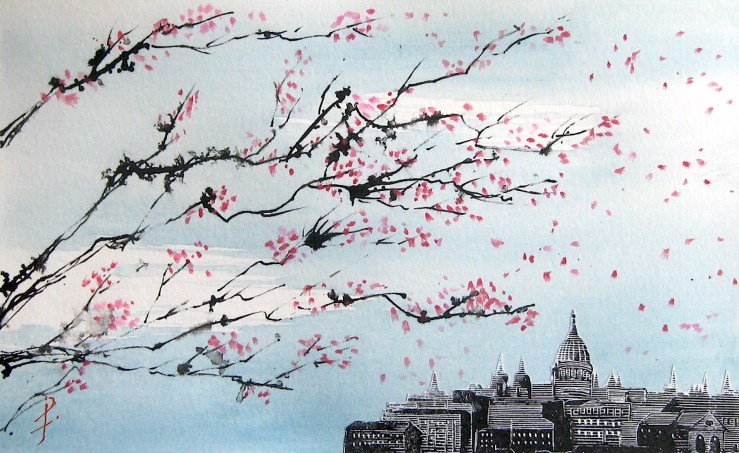
Tremont Street, Boston, in June, collage on board, detail. I used to work down there.

An acquaintance of mine, poet and columnist Doug Holder, recently posed a question on social media: Have you ever been a regular, and what does that mean to you?

He was responding to an article in Esquire, โ€œThe Lost Art of Being a Regular,โ€ by Mark Allen Burger. Itโ€™s paywalled (fair enough). Check your public library if youโ€™d like to read it. In any eventโ€ฆ

I realized that being a regular may indeed be a lost art, at least in the US. People my age are forgetting what it was like, and younger people never knew.

I further realized that we should probably revive this lost art, because we are entering a time when weโ€™re going to need it.

Being a regular is a status relative to another person. Itโ€™s an earned title. You become a regular when someone else says you are, based on your interactions with them.

Itโ€™s a word belonging mostly to commerce, but it has the effect of de-business-ing business, of personalizing the impersonal. Itโ€™s a humanizing word that shifts the focus from transaction to relationship.

But what is it? How does it happen, and how does it work? Iโ€™ll tell you about my own experience.

Coffee and a Newspaper

In my home town, New York City, I commuted to work by the same route every weekday, along with thousands of other people, from Queens into Manhattan. Every morning, I stopped at the newsstand at the top of the stairs into the subway and bought the NY Times. I then went downstairs and stopped at the coffee stand in the station to get a regular coffee with milk and one sugar. I then continued down to the train with my paper and my coffee.

Beyond requesting my paper and ordering my coffee, and saying thank-you, I never spoke to anyone and barely made eye contact because thatโ€™s how we rolled in NYC.

And yet one day, I got to the newsstand, and my Times was folded and waiting for me, along with the papers of other regulars. I just had to put down my money and take it.

In about the same time period, I got down to the coffee stand one day and found my coffee waiting for me on the counter – regular, milk, one sugar, hot and fresh because the guy knew what time Iโ€™d be there.

We still didnโ€™t talk to each other beyond me saying thank-you, which was now all I had to say.

I realized suddenly that I was part of the scene, the community. Despite the traditional New York conversation-avoidance, I was remembered, recognized. I was known to these people. If I ever went missing, those guys along my daily commute would be able to help the cops pinpoint just where and when Iโ€™d vanished.

A little while after that social breakthrough, I had another. I worked in those days in the financial district, near Wall Street. Back then, the work day was 9 to 5 with a lunch break from 12 to 1. This was universal. So every day, the narrow streets of lower Manhattan would be crammed with people arriving to work, then become empty and silent, then get crammed with people going out for lunch, then become empty and silent again, then get crammed with people going home, and then stay empty and silent overnight. (I know about overnight because sometimes my friends and I would wander around down there to decompress after getting out of the Village dance clubs, and it was just us and the rats and the ghost of Peter Stuyvesant.)

Peter Stuyvesant, still a regular on the lower Manhattan scene. Quick pastel sketch from a portrait, c. 1660, attr. Couturier.

Those crammed hours were absolute madness, and the lunch rush was the craziest because the traffic was less orderly than the morning and evening rushes.

Near the office where I worked stood a hamburger and hot dog joint. It was a tiny little storefront on the corner that only cooked 2 or 3 things with 2 or 3 variations each, and it was only open for lunch. What little they did, they did extremely well, though, and the place was incredibly popular, so much so that they had to create a hyper-efficient way to process customers in the limited lunch-rush time window.

They had one line going in the double-door entrance and another line going out. Youโ€™d ride the in-line to the counter (where there were always a few crusty old dudes eating in), and place your order with the guy who would shout it out to the short-order cooks at the grill behind him. Then youโ€™d step to your left and pay and receive your food, which would be ready and bagged in seconds because they were already cooking everything on the menu. Then youโ€™d turn around and ride the out-line back to the street.

They gave this service to literally hundreds of people within the space of a single hour.

Now, granted, Iโ€™m a creature of habit, and I had my favorite thing that I would get from that place every time I went, up to three days a week because it was cheap as well as good.

But still – hundreds of customers on a virtual conveyor belt every single lunch rush.

And yet a day came, surprisingly quickly, when I got up to the counter, and the guy said, โ€œThe usual?โ€

Stunned, I said, โ€œYes, thanks.โ€ And he turned and shouted out exactly what I wanted. I will never comprehend how, out of that sea of humanity all getting burgers and hot dogs, he could remember anyoneโ€™s order or face, but the man obviously had the power of professionalism.

Thatโ€™s what being a regular means to me. It means being a noticed presence in the spaces you occupy and move through. It means being recognized by identity markers unique to you. Small woman with long, dark hair. New York Times. Regular coffee, milk, one sugar, 7:30 AM. Hot dog, heavy mustard, sauerkraut, ginger ale. It means being part of someoneโ€™s world enough that they add you to their schedule. They prepare for you, reserve space for you. You become part of the easy, efficient flow of their work. You are expected, and missed when you donโ€™t show up.

Sometimes, it can be moments like the time the delivery guy from our favorite Chinese restaurant came to our apartment by mistake. He was going to another apartment in our large building, but his feet carried him to our door by sheer force of habit, and he didnโ€™t realize it until we were all looking at each other in confusion. And then we laughed.

All Our Third Places

Whether youโ€™re in and out in 30 seconds or you stick around for hours, anywhere that youโ€™re a regular becomes a โ€œthird placeโ€ in your territory.

Third places, a concept developed by sociologist Ray Oldenburg, are spaces for free, informal, social interaction, additional to home and work. Itโ€™s your coffee shop, pub, park, bookstore, basketball court, hair salon, etc. I argue they can also be transitional spaces on routes we travel frequently, turning the route itself into a third place. Hereโ€™s a free article about the importance of third places by Ray Oldenburg and Karen Christensen in the UNESCO Courier.

Being a regular at a place grants you a certain emotional ownership of it. Something about it is now yours. Your paper, your coffee, your lunch, your time slot. Eventually, you might even have your table by the window, your pizza combo added to the menu with your name on it.

The day I became a regular at the news and coffee stands granted me ownership over my commute. That route became part of my home turf. I could relax and enjoy my morning that little bit more. I felt comfortable enough to look around and begin to recognize other regulars I shared it with, who also ceased to be strangers just by dint of being seen every day.

Has that ever happened to you?

Has a barista anticipated your order? Maybe your favorite Thai restaurant knows how spicy you like your drunken noodles. Is there a shop you spend so much time in that when a newbie asks for help, you take care of them before revealing that you donโ€™t work there? Do you see the same joggers and families at the park every Saturday, and do they see you?

How many such third places do you have? Probably fewer now than before the pandemic. Covid cut us off from so much that was regular about our lives, but it was just the knock-out punch. It was already getting harder to become a regular before that disaster.

Our digitized, virtual, automated world yaps endlessly about connection and community, but it doesnโ€™t want us to go anywhere or meet anyone. We save our coffee order to the app, but the app wonโ€™t anticipate our arrival or remark on our absence. The worker wonโ€™t connect our face to our cup. Weโ€™re responding only to the apps, not each other.

One-click ordering. Frictionless payment. Contactless delivery. These โ€œconveniencesโ€ scrub the humanity out of our habits. Theyโ€™re bad when we need them, as during a plague, but worse when we donโ€™t.

Supposedly, eliminating all that interactive friction will free up more time for โ€œqualityโ€ socializing. Really, though?

I mean, your commute is your commute. Is it better to make that daily trip with people to help you fuel up on the way out and wind down on the way back, or to do it in a bubble of invisibility and isolation?

And how will we do all this quality socializing when the work day is longer and more exhausting than ever? How much of that freed-up time gets spent doomscrolling before collapsing into bed?

Here-Place, Now-Moment

JFries Devonshire Street
Devonshire Street, Boston, collage with wood, on board.
One of my regular haunts.

When you leave your home, how many faces do you recognize, and how many might recognize you? Do you know which dogs belong to which houses on your street? Do you have a personal map of businesses and amenities along your various routes, favorites that you use again and again?

If you needed to beg a favor, or drop out for a couple of hours, or you were being followed by a suspicious van, where would you go? What haven or check-in spaces do you have, where you are โ€œone of usโ€?

Thatโ€™s what community is, our โ€œus.โ€ The We of We the People. Itโ€™s our extended home where we do all our regular stuff among our regular faces. We belong because we are participating members.

To be clear, Iโ€™m a hardcore introvert. I hate chatting, smiling, sparkling. I love silence and solitude. But even those who read books at ballgames are present. We recognize and are recognized. None of us has to perform a particular way to be part of the โ€œus.โ€ We just have to show up often enough to be a regular.

The Age of Convenience is failing us. We need those passing, superficial relationships with all their frictions. We must re-humanize our ordinary, daily lives.

We do that, first, by getting out of the house, and then by de-automating all those pesky little tasks weโ€™re told are such a burden.

Turn your eyes from your phone to the person doing something for you. Order online but go to the local restaurant to pick up your meal in person. Say thank-you.

Choose your favorite businesses, services, amusements where you live, where you work, along your routes, and make a habit of stopping in rather than adding another app. Use your commons – parks, beaches, libraries, transit, etc. You part-own the damn things, after all.

Pop the bubble. Put the phone in your pocket. Be present in the here-place and now-moment. Little by little, youโ€™ll start feeling the โ€œusโ€ around you. Youโ€™ll hear the music and languages. The dogs will learn your scent, and youโ€™ll learn your neighborsโ€™ roses and holiday decorations. Youโ€™ll collect arcane, insider knowledge of all your places. Youโ€™ll start thinking of your street, your shops, your station.

And before you know it, youโ€™ll be surprised by someone greeting you with, โ€œThe usual?โ€ followed by, โ€œDidnโ€™t see you last week.โ€

And then youโ€™ll be a regular.

Note: The essay above contains 2,022 words which, according to western numerology, reduces to 6. The number 6 represents love, partnership, and community. In tarot, the sixth Major Arcanum is The Lovers, while the sixes of the minor suits represent various forms of shareable benefits. The 6 of Swords, an easing of burdens and difficulty. The 6 of Wands, victory and leadership. The 6 of Cups, relationships, memories, and simple joys. The 6 of Pentacles, sharing and mutual aid.

Please note also, this essay is 100% human-made by me. No AI was used in the writing or the art, all of which are my original creations. – Jen
Still No Kings

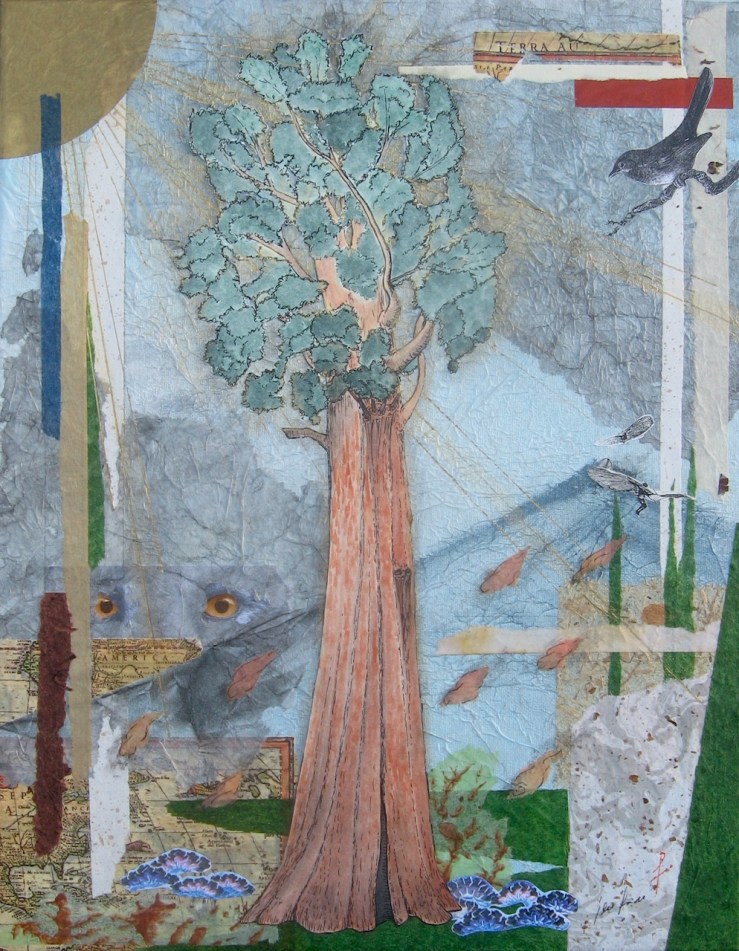
Jen Fries, Standing: Portrait of the General Sherman, watercolor, ink, and collage on canvas, 14 x 18 inches

Yesterday, what passes for the US Congress these days sold our country out for fascism. Not to put too fine a point on it, you know.ย 

The DC Democrats put up all the fight they could. Some will claim they did nothing at all, but those people are wrong. The fact that the Dems could do so little is not their fault – this time. In the end, what may turn out to be the most disastrous bill in US history passed the Senate strictly along party lines by only one vote, and the House by just four votes, also strictly by party. One vote and four votes. Let no magaist say the word โ€œmandateโ€ ever again, especially where I can hear them.

I wonโ€™t go into all the details. Letโ€™s just say the 2025 tax and budget bill will, in broad strokes, promote eugenics by slashing access to health care, housing, and food assistance for the most needy, inflict terror and violence by turbocharging the size and budget of the masked goon squads hunting immigrants and protesters in our streets, throw the US economy into total chaos, and consolidate even more power into the hands of that stupid orange dirtbag theyโ€™ve made their god. 

Said stupid orange dirtbag will sign this piece of shit into law today, July 4th, Americaโ€™s Independence Day, just to add insult to the injury.

Itโ€™s easy to feel discouraged and cynical about the irony of celebrating the 4th of July in the midst of fascists actively dismantling democracy before our very eyes, but consider:

Wasnโ€™t the United States of America created out of revolution against tyranny?


Hint: Yes, it was. Thatโ€™s kind of what weโ€™re about as a political body.

Have we been perfect at it? No, never. Have we lived our professed ethics? Not even close. Have we also acted like tyrants against others and against our own? Yes, we have and do.

But that doesnโ€™t change the fact that the US was indeed created specifically to throw off the chains of tyranny. Our failures only show that weโ€™re not done. The revolution is ongoing.

So on this July 4th, 2025, I invite you all to embrace the ideal of what the USA is supposed to be about, and to take your stand on it.


Last winter, I blogged about new years and fresh starts, and how we actually get multiple chances to start over as the cycles by which we measure time complete and begin their loops. We get a solar new year at the Winter Solstice with the restart of the Sun cycle, a planetary new year in early January with the start of a new Earth orbit, and a lunar new year after that with the restart of the Moon cycle. 

Plus, each of us gets to claim a personal new year on our birthday. I decided that for everyone in the world. Youโ€™re welcome.

Thatโ€™s four chances every year to take stock, measure growth, celebrate accomplishments, refresh goals, and start next chapters.

Iโ€™d like to add a fifth annual fresh start – a civic new year on the nationโ€™s founding day. 

Every country can do this on their own national anniversaries, of course. For us Americans, our civic new year would be the 4th of July, obviously – the day when We the People of the United States take off from work, have a bbq, some parades, fireworks, and I propose from this year forward, take some time to assess our progress towards building a more perfect union, towards realizing Truth, Justice, and the American Way.

I would like to add political action to our Independence Day celebrations. I donโ€™t mean conformist pantomimes of red, white and blue cosplay and singing our unsingable anthem. Rather, I want some good, loud marches in addition to the parades, with lots of signs calling out the unfinished work of the Republic. Impromptu town halls where we call our elected officials to account for themselves – again. Strongly worded letters to the editors of legacy media to remind them of the responsibilities that come with being protected by the First Amendment. Social media progress reports by everyone with any interest in anything, showing the status of boycotts and labor actions, the scorecards on the issues in contention, and lists of how our Senators and Representatives have been voting lately.

And Iโ€™d like to add the positive ideals of civic life to the holiday as well. Letโ€™s normalize no longer taking our public services for granted in this country. Letโ€™s make the 4th of July a day that celebrates the practical things we gained by our revolution – our courts, public libraries, and schools, our civil servants in all the departments, the Post Office (everyone loves the Post Office), our lands, waters, and parks, and of course, our Constitution.

We donโ€™t need another military holiday in the US, or another day for capitalists to exploit national myths to push sales. We need a holiday that reminds us of how we got this country in the first place, what itโ€™s supposed to be, and why it matters enough for each of us to do something about it. 

We need a We the People Day.

And we have one. We call it Independence Day, and itโ€™s the day when Americans were invented and defined as a people who cannot be oppressed because we will not be oppressed.


So, here we are on Independence Day, our civic new year. Where do we stand, and where should we go next? What resolutions should we make to become better citizens over the next twelve months?

Okay, no sugarcoating. Where we stand is in deep shit. We have completely botched our job as citizens. Sorry, but itโ€™s time for some radical acceptance starting with tough love.

Everyone knows this country suffers from a chronic infection of racism, violence, and social dominance ideation. All we ever do about it is treat the symptoms when they flair up, while never addressing the underlying condition. We ignore it until it builds up enough, and oopsie-whoopsie Civil War. Then a little soothing cream and a Constitutional Amendment, and oh dear, decades of KKK violence. Look, just keep it covered so it doesnโ€™t spread and we can keep going to work, okay? But it does spread until thank the gods, another crisis interrupts it. Yay for world war, eh? Oh, but dammit, now theyโ€™re murdering civil rights workers. Ugh. Okay-okay, weโ€™ll take this seriously. Pass a bunch more laws, and actually enforce them this time, and look, itโ€™s working. We all feel much better now, right? Letโ€™s get back to work and forget it ever happened. Itโ€™s in the past.

Only itโ€™s not in the past. Itโ€™s in the bones and muscle of our society. Itโ€™s a condition America was born with, and because we donโ€™t deal with it honestly to neutralize it – make the required behavioral and structural changes for our civic health – it keeps coming back again and again and again. Each outbreak of it is potentially lethal to our body politic. 

We understand this when weโ€™re talking about diabetes or cancer. When will we understand and accept it in the context of the society we depend on just as much as our own bodies?

So the assessment of our progress is that we are in the midst of another acute outbreak of our societal illness. Weโ€™re not the only ones. This toxic, destructive, antisocial mindset of fear and aggression is rooted deep in the US, but itโ€™s common among humanity. Many countries are dealing with similar situations right now, and itโ€™s spreading like political covid. Our outbreak is one of the worst, though, so we really need to deal with it.

Where do we go next? Well, we are in crisis, so this year, we need to focus on the crisis. But we canโ€™t fall into our traditional habit of only doing the short-term fixes without thinking about long-term reforms to prevent future flair-ups. We must transition off simple suppression of active symptoms and move towards intervention and preventive management for life – for the sake of our lives.

From today through July 4th, 2026, let us focus on breaking the maga fever.

Letโ€™s sanitize our communities from fascist goon squads and the fear and danger they bring with them. Know your rights and use the rules to your advantage. Call the real cops (no matter what you think of them). Like they always tell us – if you see something, say something.

Unless the goons are the ones trying to talk to you. Then keep your mouth shut. If they want to talk to you, they can show their faces, their IDs, and their warrant, and then they can make an appointment with your lawyer.

And be smart about videos and photos. Only show the people and faces you want to. Nobody needs to be able to track everyone who was protesting peacefully before the brownshirts showed up.

Generally conduct yourself with safety in mind. Cultivate situational awareness. That means take the damn buds out of your ears and put the damn phone in your pocket once in a while. Know your route and exit options everywhere you plan to go. Do not post your safe maps on your social media, for fucks sake, omg. And follow the safety measures recommended by civil rights activists all over the internet. We all see the info every day.

Basic community safety measures like this will go a long way towards deflating the threats the fascists are using to bully us into submission.

Letโ€™s cleanse our political discourse of lies, propaganda, and bullshit. Letโ€™s learn how to tell good from bad when it comes to information and news sources. Rely on primary sources as much as possible and swear off relying on social media gossip mills.ย 

Apply โ€œsee something, say somethingโ€ to political information, too. When we see the propaganda, bullshit, and lies, call it out, every time. Let nothing slide unchallenged, no matter who says it. We need to hold our own and ourselves to account as well.

Letโ€™s cleanse our public offices of corruption by shining the bright light of public attention on them constantly. For real, public officials need to remember who they work for, and itโ€™s not the ones paying their bribes.

Make 2025-26 be a maelstrom of town halls, crammed constituent office hours, overwhelmed phone lines and emails. Fill media with demands for investigations. Bring the receipts from the states and districts. Hell, organize recall elections. It doesnโ€™t matter if theyโ€™re almost impossible to pull off. They get attention. Letโ€™s help our electeds experience the same worries and stresses we voters are, thanks to their political choices. You know, to help them understand where weโ€™re coming from.

Oh, Iโ€™m sorry, GOP politicians, are you feeling exhausted? Do you dread going to work and looking at the news every day? Are you worried about losing your job? Welcome to the party, you โ€œbunch of little bitches.โ€ This is the bed you made, so you get to lie in it with the rest of us.

If they donโ€™t like it, they can fix it easily. All they have to do is switch their obedience from Trump to their constituents. Or they can quit and go home. Simple.

And if they refuse to cooperate? Well, thatโ€™s what the petty recalcitrance of pure spite is for, because until they do what We the People want, let them never enjoy another swordfish and whiskey dinner in peace.

I think those are three good starting points for the civic new year in a fascism epidemic. We can put the rest of our energy into building our personal strength and resilience.

Letโ€™s start building community-based options for the services the fascists are taking away from government. Iโ€™m talking about food and health care access, education for our kids, housing, legal services, community security, communications, financial services, etc.

Yes, weโ€™re all dealing with the horror of watching fascism rise again in the world, but donโ€™t underestimate the stress of how difficult they make ordinary daily errands. How many of us feel scared going out for lunch, for fear our meal will be interrupted by an armed abduction? How many of us lose sleep over our bills, our parentsโ€™ nursing homes, our kidsโ€™ safety at school, what to do about our neighborsโ€™ pets if they suddenly disappear?

Nobody can live under such constant ambient pressure. Understand, this is a deliberate tactic of oppressors. They exhaust resistance by literal exhaustion.

So weโ€™re not going to do that, okay? They want to take control of all the details of our lives, but weโ€™re going to keep that control, however we manage it. We donโ€™t need to get precious about details, right? Weโ€™re going to take care of ourselves and our needs as we see fit. End of.

And weโ€™re going to remember this precept: The most fundamental and effective form of resistance is to keep doing what the oppressors donโ€™t want us to do.

They donโ€™t want us to figure out for ourselves how to get food, housing, medicine, etc. They donโ€™t want us to choose how and where we work and spend. They donโ€™t want us to resolve our disputes peacefully amongst ourselves. They donโ€™t want us to relax and be happy, or feel free to play with our families in parks, or eat at cafes. They donโ€™t want us to make our own music and art. 

They want us to need them for everything.

Resistance is not needing them for one single damn thing.

Therefore, I propose three Citizen Resolutions for US Civic New Year 2025:

  • Practice radical acceptance. Acknowledge the work that needs to be done and make a start. Effort is worth more than blame.
  • Be rude. Screw respecting public officials. Those lazy, crooked assholes need to get to work or get out. Let them know that.
  • Do not obey. Fascists donโ€™t want America to exist. So be Americans, the whole nine yards, every day. Be the Americans who kicked these bastardsโ€™ asses not just in WW2 but in our first Civil War, and our Revolution, and the Civil Rights Movement, and all the other movements towards a better world since 1775. Screw them, they donโ€™t get to tell us what to do.

Happy Independence Day.
There are no American kings.


Notes: This essay belongs to the Liberty Gravy category of the Jen Fries Arts: Arting Life newsletter.

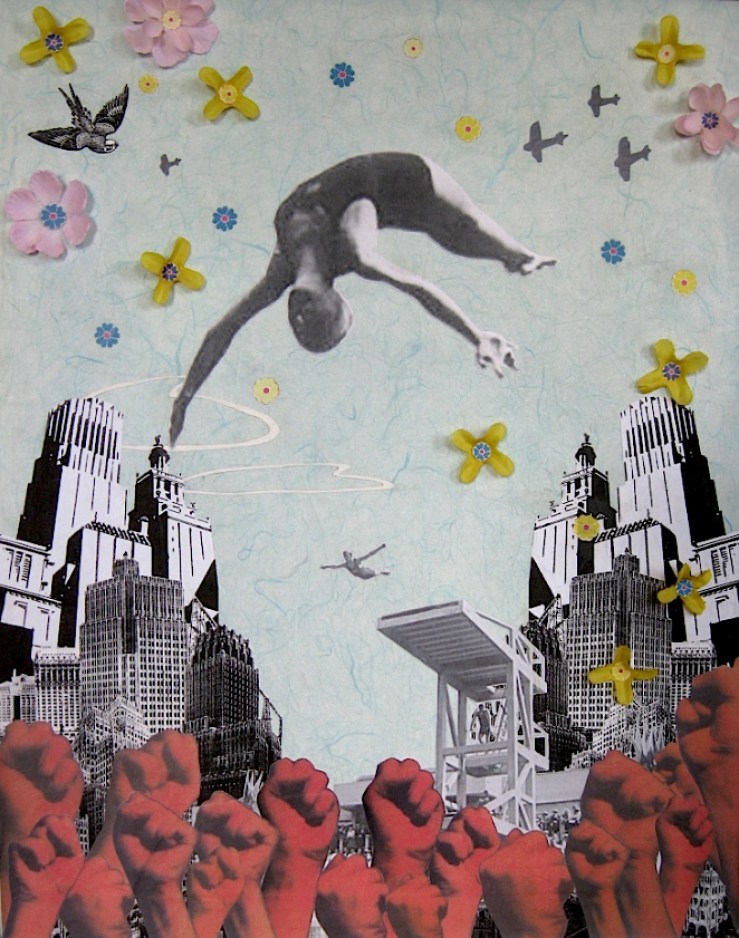
The illustrations are selected works from my portfolio, ones carrying specific political messages. All my work is political. You can ask me how, or figure it out yourself.

Omenology: The body of this essay contains 2,388 words. The numerals of the word count total adds up to 21, representing spiritual fulfillment and transformation, and reducing down to 3, representing creative expression. These two numbers align with the tarot cards The World and The Empress. The Empress signifies joy, abundance, and celebration. The World signifies self realization and expansiveness. Together, they unite micro and macro awareness, local and global action, self and society. The 2 and 8s signify balance and success, as well. So, having reached that number, I stopped editing. (“Omenology” is a word I made up today.)