On Being a Regular

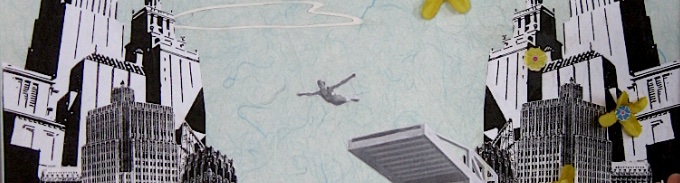
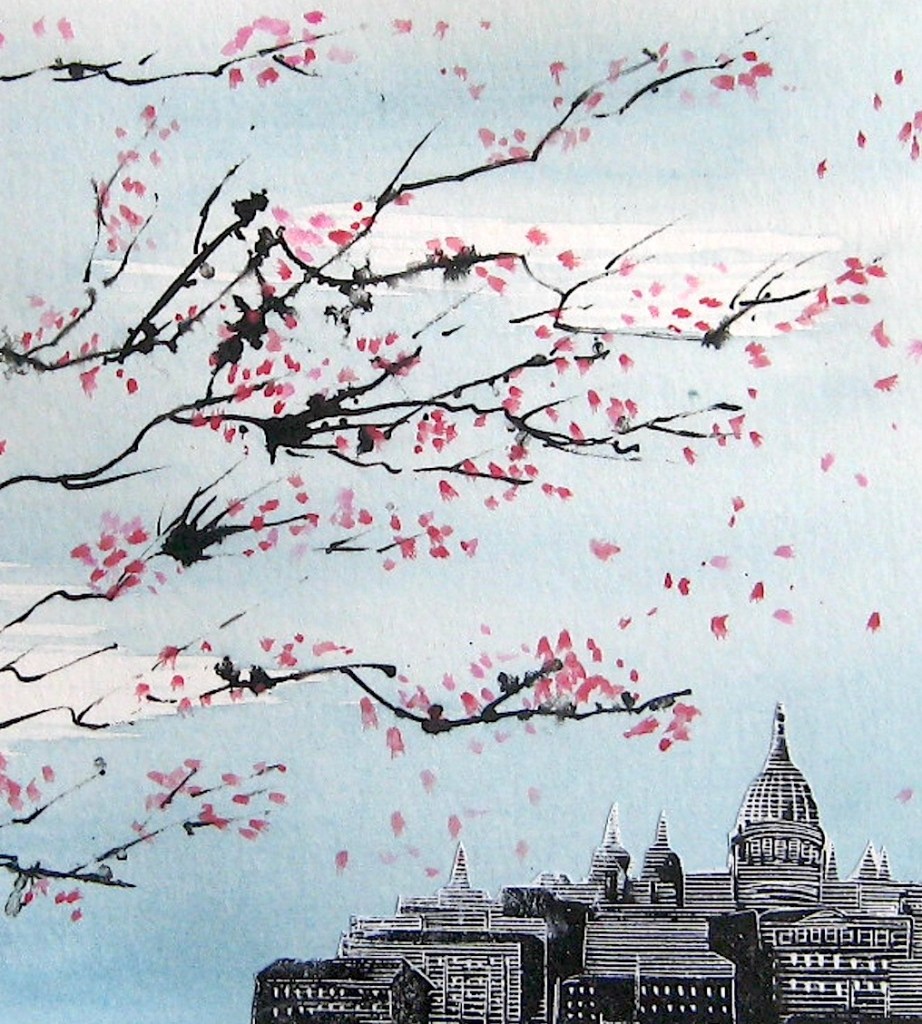
Tremont Street, Boston, in June, collage on board, detail. I used to work down there.

An acquaintance of mine, poet and columnist Doug Holder, recently posed a question on social media: Have you ever been a regular, and what does that mean to you?

He was responding to an article in Esquire, โ€œThe Lost Art of Being a Regular,โ€ by Mark Allen Burger. Itโ€™s paywalled (fair enough). Check your public library if youโ€™d like to read it. In any eventโ€ฆ

I realized that being a regular may indeed be a lost art, at least in the US. People my age are forgetting what it was like, and younger people never knew.

I further realized that we should probably revive this lost art, because we are entering a time when weโ€™re going to need it.

Being a regular is a status relative to another person. Itโ€™s an earned title. You become a regular when someone else says you are, based on your interactions with them.

Itโ€™s a word belonging mostly to commerce, but it has the effect of de-business-ing business, of personalizing the impersonal. Itโ€™s a humanizing word that shifts the focus from transaction to relationship.

But what is it? How does it happen, and how does it work? Iโ€™ll tell you about my own experience.

Coffee and a Newspaper

In my home town, New York City, I commuted to work by the same route every weekday, along with thousands of other people, from Queens into Manhattan. Every morning, I stopped at the newsstand at the top of the stairs into the subway and bought the NY Times. I then went downstairs and stopped at the coffee stand in the station to get a regular coffee with milk and one sugar. I then continued down to the train with my paper and my coffee.

Beyond requesting my paper and ordering my coffee, and saying thank-you, I never spoke to anyone and barely made eye contact because thatโ€™s how we rolled in NYC.

And yet one day, I got to the newsstand, and my Times was folded and waiting for me, along with the papers of other regulars. I just had to put down my money and take it.

In about the same time period, I got down to the coffee stand one day and found my coffee waiting for me on the counter – regular, milk, one sugar, hot and fresh because the guy knew what time Iโ€™d be there.

We still didnโ€™t talk to each other beyond me saying thank-you, which was now all I had to say.

I realized suddenly that I was part of the scene, the community. Despite the traditional New York conversation-avoidance, I was remembered, recognized. I was known to these people. If I ever went missing, those guys along my daily commute would be able to help the cops pinpoint just where and when Iโ€™d vanished.

A little while after that social breakthrough, I had another. I worked in those days in the financial district, near Wall Street. Back then, the work day was 9 to 5 with a lunch break from 12 to 1. This was universal. So every day, the narrow streets of lower Manhattan would be crammed with people arriving to work, then become empty and silent, then get crammed with people going out for lunch, then become empty and silent again, then get crammed with people going home, and then stay empty and silent overnight. (I know about overnight because sometimes my friends and I would wander around down there to decompress after getting out of the Village dance clubs, and it was just us and the rats and the ghost of Peter Stuyvesant.)

Peter Stuyvesant, still a regular on the lower Manhattan scene. Quick pastel sketch from a portrait, c. 1660, attr. Couturier.

Those crammed hours were absolute madness, and the lunch rush was the craziest because the traffic was less orderly than the morning and evening rushes.

Near the office where I worked stood a hamburger and hot dog joint. It was a tiny little storefront on the corner that only cooked 2 or 3 things with 2 or 3 variations each, and it was only open for lunch. What little they did, they did extremely well, though, and the place was incredibly popular, so much so that they had to create a hyper-efficient way to process customers in the limited lunch-rush time window.

They had one line going in the double-door entrance and another line going out. Youโ€™d ride the in-line to the counter (where there were always a few crusty old dudes eating in), and place your order with the guy who would shout it out to the short-order cooks at the grill behind him. Then youโ€™d step to your left and pay and receive your food, which would be ready and bagged in seconds because they were already cooking everything on the menu. Then youโ€™d turn around and ride the out-line back to the street.

They gave this service to literally hundreds of people within the space of a single hour.

Now, granted, Iโ€™m a creature of habit, and I had my favorite thing that I would get from that place every time I went, up to three days a week because it was cheap as well as good.

But still – hundreds of customers on a virtual conveyor belt every single lunch rush.

And yet a day came, surprisingly quickly, when I got up to the counter, and the guy said, โ€œThe usual?โ€

Stunned, I said, โ€œYes, thanks.โ€ And he turned and shouted out exactly what I wanted. I will never comprehend how, out of that sea of humanity all getting burgers and hot dogs, he could remember anyoneโ€™s order or face, but the man obviously had the power of professionalism.

Thatโ€™s what being a regular means to me. It means being a noticed presence in the spaces you occupy and move through. It means being recognized by identity markers unique to you. Small woman with long, dark hair. New York Times. Regular coffee, milk, one sugar, 7:30 AM. Hot dog, heavy mustard, sauerkraut, ginger ale. It means being part of someoneโ€™s world enough that they add you to their schedule. They prepare for you, reserve space for you. You become part of the easy, efficient flow of their work. You are expected, and missed when you donโ€™t show up.

Sometimes, it can be moments like the time the delivery guy from our favorite Chinese restaurant came to our apartment by mistake. He was going to another apartment in our large building, but his feet carried him to our door by sheer force of habit, and he didnโ€™t realize it until we were all looking at each other in confusion. And then we laughed.

All Our Third Places

Whether youโ€™re in and out in 30 seconds or you stick around for hours, anywhere that youโ€™re a regular becomes a โ€œthird placeโ€ in your territory.

Third places, a concept developed by sociologist Ray Oldenburg, are spaces for free, informal, social interaction, additional to home and work. Itโ€™s your coffee shop, pub, park, bookstore, basketball court, hair salon, etc. I argue they can also be transitional spaces on routes we travel frequently, turning the route itself into a third place. Hereโ€™s a free article about the importance of third places by Ray Oldenburg and Karen Christensen in the UNESCO Courier.

Being a regular at a place grants you a certain emotional ownership of it. Something about it is now yours. Your paper, your coffee, your lunch, your time slot. Eventually, you might even have your table by the window, your pizza combo added to the menu with your name on it.

The day I became a regular at the news and coffee stands granted me ownership over my commute. That route became part of my home turf. I could relax and enjoy my morning that little bit more. I felt comfortable enough to look around and begin to recognize other regulars I shared it with, who also ceased to be strangers just by dint of being seen every day.

Has that ever happened to you?

Has a barista anticipated your order? Maybe your favorite Thai restaurant knows how spicy you like your drunken noodles. Is there a shop you spend so much time in that when a newbie asks for help, you take care of them before revealing that you donโ€™t work there? Do you see the same joggers and families at the park every Saturday, and do they see you?

How many such third places do you have? Probably fewer now than before the pandemic. Covid cut us off from so much that was regular about our lives, but it was just the knock-out punch. It was already getting harder to become a regular before that disaster.

Our digitized, virtual, automated world yaps endlessly about connection and community, but it doesnโ€™t want us to go anywhere or meet anyone. We save our coffee order to the app, but the app wonโ€™t anticipate our arrival or remark on our absence. The worker wonโ€™t connect our face to our cup. Weโ€™re responding only to the apps, not each other.

One-click ordering. Frictionless payment. Contactless delivery. These โ€œconveniencesโ€ scrub the humanity out of our habits. Theyโ€™re bad when we need them, as during a plague, but worse when we donโ€™t.

Supposedly, eliminating all that interactive friction will free up more time for โ€œqualityโ€ socializing. Really, though?

I mean, your commute is your commute. Is it better to make that daily trip with people to help you fuel up on the way out and wind down on the way back, or to do it in a bubble of invisibility and isolation?

And how will we do all this quality socializing when the work day is longer and more exhausting than ever? How much of that freed-up time gets spent doomscrolling before collapsing into bed?

Here-Place, Now-Moment

JFries Devonshire Street
Devonshire Street, Boston, collage with wood, on board.
One of my regular haunts.

When you leave your home, how many faces do you recognize, and how many might recognize you? Do you know which dogs belong to which houses on your street? Do you have a personal map of businesses and amenities along your various routes, favorites that you use again and again?

If you needed to beg a favor, or drop out for a couple of hours, or you were being followed by a suspicious van, where would you go? What haven or check-in spaces do you have, where you are โ€œone of usโ€?

Thatโ€™s what community is, our โ€œus.โ€ The We of We the People. Itโ€™s our extended home where we do all our regular stuff among our regular faces. We belong because we are participating members.

To be clear, Iโ€™m a hardcore introvert. I hate chatting, smiling, sparkling. I love silence and solitude. But even those who read books at ballgames are present. We recognize and are recognized. None of us has to perform a particular way to be part of the โ€œus.โ€ We just have to show up often enough to be a regular.

The Age of Convenience is failing us. We need those passing, superficial relationships with all their frictions. We must re-humanize our ordinary, daily lives.

We do that, first, by getting out of the house, and then by de-automating all those pesky little tasks weโ€™re told are such a burden.

Turn your eyes from your phone to the person doing something for you. Order online but go to the local restaurant to pick up your meal in person. Say thank-you.

Choose your favorite businesses, services, amusements where you live, where you work, along your routes, and make a habit of stopping in rather than adding another app. Use your commons – parks, beaches, libraries, transit, etc. You part-own the damn things, after all.

Pop the bubble. Put the phone in your pocket. Be present in the here-place and now-moment. Little by little, youโ€™ll start feeling the โ€œusโ€ around you. Youโ€™ll hear the music and languages. The dogs will learn your scent, and youโ€™ll learn your neighborsโ€™ roses and holiday decorations. Youโ€™ll collect arcane, insider knowledge of all your places. Youโ€™ll start thinking of your street, your shops, your station.

And before you know it, youโ€™ll be surprised by someone greeting you with, โ€œThe usual?โ€ followed by, โ€œDidnโ€™t see you last week.โ€

And then youโ€™ll be a regular.

Note: The essay above contains 2,022 words which, according to western numerology, reduces to 6. The number 6 represents love, partnership, and community. In tarot, the sixth Major Arcanum is The Lovers, while the sixes of the minor suits represent various forms of shareable benefits. The 6 of Swords, an easing of burdens and difficulty. The 6 of Wands, victory and leadership. The 6 of Cups, relationships, memories, and simple joys. The 6 of Pentacles, sharing and mutual aid.

Please note also, this essay is 100% human-made by me. No AI was used in the writing or the art, all of which are my original creations. – Jen
The 11th Hour

“The first thing I thought of was their mothers.”

Iโ€™m writing this at the end of Veterans Day. Ten to midnight. Not the key time of the holiday, which is properly the 11th hour of the 11th day of the 11th month – the precise time of the signing of the armistice that ended World War I. Hence the original name of the day, Armistice Day. It was changed to Veterans Day under Eisenhower.

And that makes sense because our veterans deserve the recognition. It is literally the least we can do for them, after all, considering how we, as a nation, routinely renege on all our other promises to those who put themselves in danger in service to us.

But to me, November 11 will always be Armistice Day. The day the War to End All Wars ended. Of course, that didnโ€™t hold, did it? Another good reason to change the name.

But hear me out on this. Maybe we should keep the old name. 

Iโ€™ve always thought a wonderful way to honor our veterans would be to make fewer of them. To be less eager – even cavalier – about sending our young people out to fight, possibly die, for what are, increasingly, political or, worse yet, financial causes. It would definitely show respect for our veterans to quit extending wars indefinitely, at the very least.

Rather, Iโ€™d like to work towards a world in which those brave enough to risk their lives to fight for others are honored by not wasting their courage. By avoiding conflict as much as humanly possible, minimizing it when it cannot be avoided, and ending it quickly and completely.

So I think I will always celebrate Armistice Day on Veterans Day. A holiday dedicated to ending war. To agreeing on peace. To stopping the violence between nations.

Because of Armistice Day, 11 is a lucky number to me. An auspicious number. In western numerology, it is one of the Master Numbers, double-digit numbers which amplify their inherent meanings and energies. 11 represents spiritual awareness, a profound connection to higher wisdom. It carries the harmony, sensitivity, and empathy of numeral 2, and multiplies the innovativeness, focus, willingness to embrace change of numeral 1, empowering both with spiritual energy.

One might say that numeral 11 symbolizes the power to end wars, not by conquest or defeat, suppression or suspension, but by actually ending them. That strange and vast power that can get people to agree at last to just stop fighting each other.

I think thatโ€™s a power worth celebrating – worth cultivating – especially in a world so angry and full of people eager for war, whatever their reasons may be.

By the way, in tarot, the 11th card of the Major Arcana is Justice in the Waite-Smith deck. Justice is the balance of right and wrong and the power of natural and secular law. In some other decks, the 11th card is Strength, aka Fortitude, which teaches us to master our angers and fears, to tame them and put them to good use. The number 1 card is The Magician who uses the tools of life to make stuff happen, and number 2 is The High Priestess who offers insight into inner truths.

Interesting things to consider when seeking peace in a time of conflict.


Notes:

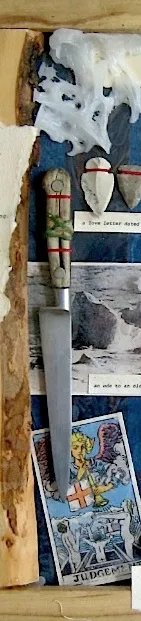
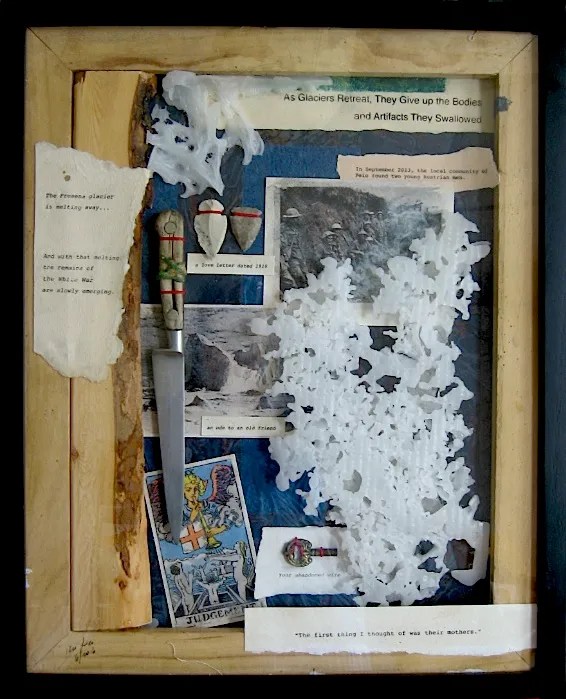
Illustration: “Judgment,” mixed media assemblage referencing the return of the dead of WWI as climate change melts the glaciers of the Italian Alps, releasing the remains of soldiers lost in ice all this time.

This essay’s word count is 542, which adds up to 11.

Poem: Night Storms in March

Be kind to the trees, Wind

I don’t care about much else
– Roofs and walls

Shallow vanities
needing upgrade anyway

But if the trees fall,
where will the birds sleep?

What will hold the flood?
Embrace the Earth?

Draw the soul from my bones
so that someday

someday

I might yet get a chance
to pay my debts?

Be kind to the trees, Wind

For if they do not stand,
I can’t walk


Written during a series of gusting storm fronts that swept through my city over several days. March came in like the proverbial lion this year. I wrote this while the wind howled, my house swayed, the dogwood branches clawed across my windows in the dark, and I just had one request.

Which was granted, after all.

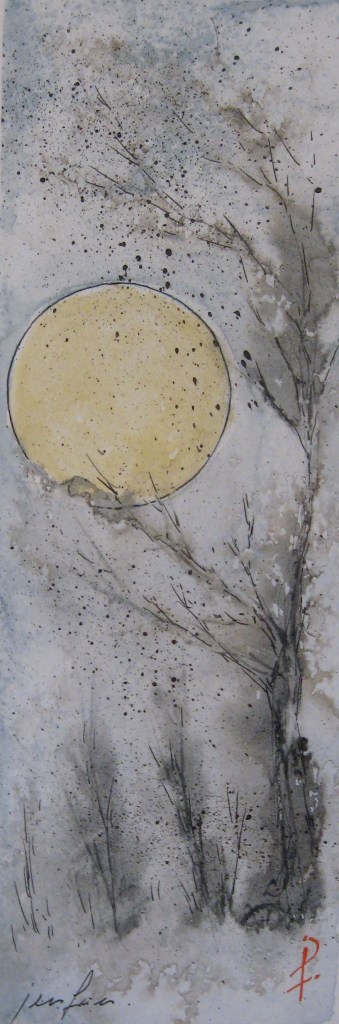
The illustration is a small painting in ink and watercolor.

-Jen

Blackout Day Bustin’ Out All Over

Today, February 28, 2025, is Economic Blackout Day.

Youโ€™ve probably heard or seen something about this. At first an informal call for consumer pressure against rollbacks of DEIA (Diversity, Equity, Inclusion, Accessibility) programs in the US, from a grassroots movement called The Peopleโ€™s Union, Economic Blackout Day quickly went viral on social media. It is now growing more organized, with calls for more consumer actions throughout March and April, for starters.

It begins at 12:00AM and runs through 11:59PM. For this whole day, we are suspending all non-essential commerce. No shopping. No buying. Especially, no corporate brands or chains. If you must spend money, go to small, local shops, preferably in person, to avoid giving business to Google et al., and pay in cash, to avoid giving business to credit card companies and big banks.

You might think a single day of across-the-board economic shutdown wonโ€™t have any effect. But I happen to be a fan of consumer activism, so let me explain why I encourage you to get on board with Blackout Day.

First, this day is just the beginning. We might call it a โ€œshot across their bow,โ€ i.e. a warning to remind the people trying to dismantle our Constitution and way of life what leverage We the People of the United States really hold.

One inescapable fact of the USA is that it runs on money. For good or ill, the US is a mercantile nation. Money is the body and soul of our politics and our power structure.

And there is no money if there is no We the People. The US economy runs entirely on the labor and purchasing of millions of Americans. Thatโ€™s us doing the jobs and us buying the stuff. Anything that interferes with us showing up for work or us buying stuff from stores slows the economy immediately. If it keeps up a while, our โ€œenvy of the worldโ€ economy quickly starts to shrink.

And boy-howdy, do the billionaires start yelping when that happens.

Remember the 2008 crash, when the global economy very nearly collapsed and countless Americans lost their homes and were drowning in debt. Remember how the economic pundits and the billionaire CEOs were all over media complaining about the slow recovery after that crisis of their making. Remember how they blamed the American people for unpatriotically – yes, some of them actually invoked patriotism – saving our money instead of spending it like they wanted us to.

Remember the pandemic, when there were no jobs, no open shops, even the supply chains were shut down, but we individual worker-consumers were still getting scolded for not getting out there to lend it, spend it, send it rolling along. I will swear to my last breath that I heard multiple capitalists on US media literally declaring that keeping the economy going was more important than keeping ourselves alive, and we were betraying the nation by staying home just to stay healthy.

Were any of those pundits, capitalists, or CEOs on the brink of starvation from the faltering economy in those crises? No, they were not. So why did they care so much?

If I were an economist, it would be complicated to explain, but Iโ€™m not, so itโ€™s simple.

The heads of US industry, the leaders of our dominant businesses, our CEOs and Directors, our would-be American oligarchs are, at the end of the day, little more than glorified peddlers. Take a hard look at them, all those Big Corp brands. Theyโ€™re all basically hawking junk on street corners, just like a hundred-plus years ago when they were selling liver pills and miracle tonics off wagons and conning yokels into selling their land for wildcat oil drilling.

All these years, all these generations, these latter-day robber barons built their fortunes by conning – or extorting – the rest of us into giving them all our labor and all our money.

When we stop giving them those things, their house-of-cards empires start to shake. It never fails.

A dip in commerce means a dip in profit margins – a hiccough in line-go-up. It doesnโ€™t matter if itโ€™s just a one-day event. The blip will appear on the radar, and the voting shareholders wonโ€™t like it, since the only reason for any of these grifters to exist at all is to maximize profits for voting shareholders. Blips donโ€™t maximize.

So on February 28, we will do our best to put a blip on the radar.

If theyโ€™re smart, they will listen to our demands. They will back off their attempt to turn the US into a fascist client state to Vladimir Putin. They will restore order, funding, and staffing to the US federal government. They will obey the orders of the federal courts. They will pass a proper federal budget. They will restore our support for our traditional allies and trading partners in accordance with our treaties. They will quit fucking around with things they donโ€™t understand.

If theyโ€™re not smart, then there will be more blips. Bigger blips. More blackouts will follow, along with longer boycotts and labor actions. 

If they take away our rights from us, we will take away our money from them. If they take away our liberty, we will take away our work. If they take away our Constitution and our system of law and representation, we will take away the life blood of the economy and their industries.

And we shall see who wins the argument. Myself, Iโ€™m betting on We the People, because we have the numbers, and without us, they have nothing.

Now, as a movement, economic resistance is relatively slow and requires discipline, organization, and cooperation. It demands that we change long-accustomed habits, that we support each other in our communities, and that we all do some creative problem-solving.

But today is just one day. The first day. So letโ€™s try it out, and see how it goes. 

At the very least, not spending money for a day isnโ€™t going to hurt you any.

And remember, this is just for non-essential spending. There are people who would prefer a total shut-down of all transactions, but those people forget February 28 is the last day of the month. Itโ€™s Rent Day for millions of us. We must be reasonable. Do pay your rent, by whatever method you normally use. Pay your bills if theyโ€™re due. If you have to fill a prescription or keep a medical appointment, etc., take care of it. That is essential spending, not non-essential.

But stay the hell off Amazon. Stay away from the big box retailers. Donโ€™t log into your streaming services. Donโ€™t send money over the internet or pay for anything by credit card. Donโ€™t order in from a chain restaurant via a corporate gig-work delivery service. Just donโ€™t.


Now, donโ€™t get me wrong. I run a small business out of my studio. I would very dearly love for you to buy my work.

But not today. Not online today. Today is for a different kind of work, without which I might not be able to keep doing my lifeโ€™s work.

You know what Iโ€™ll be doing today, instead of trying to sell you my art? Iโ€™ll be doing some creative problem-solving. For example, I think Iโ€™ll research alternatives to Paypal and Venmo (the same company) so I can offer you a more ethical way to do business with me. Might take some time, but itโ€™s a great day to start, donโ€™t you think?

And Iโ€™ll do some artwork, so thereโ€™ll be fresh stuff for you to buy as well.


Today is the first day of the economic part of the pro-democracy resistance in the US.

Today is also the last day of the last month of winter. Tomorrow, March 1, we begin barreling into spring. Is there a better moment to wake up? To dump the old in favor of the new? To clean our house?

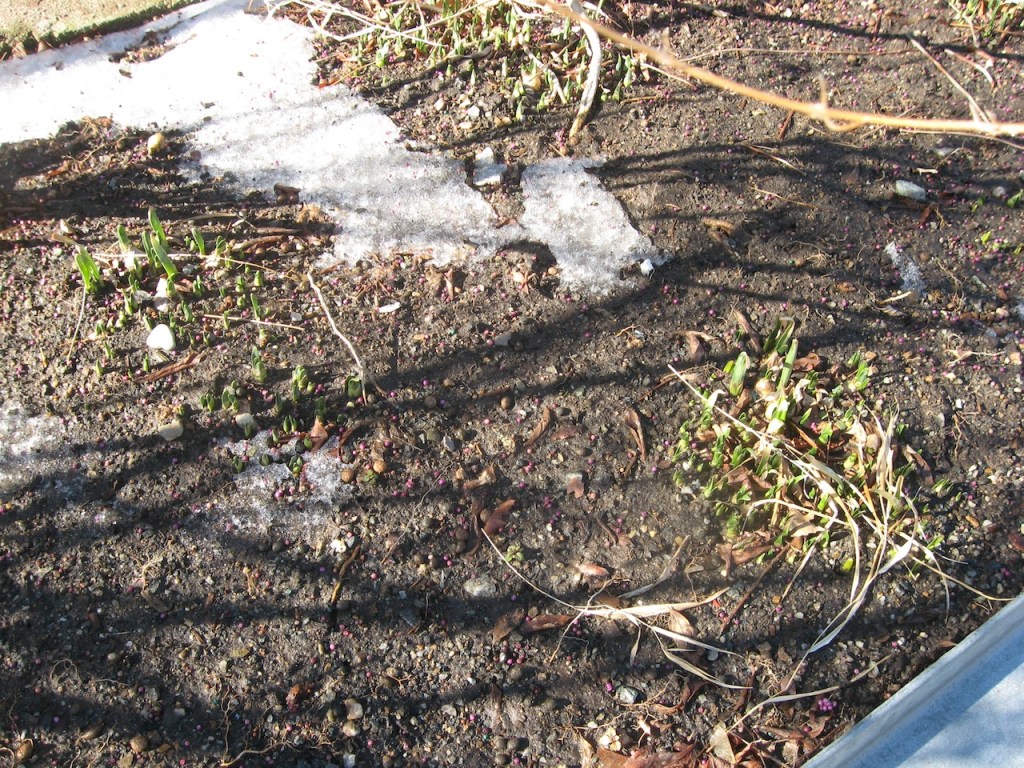
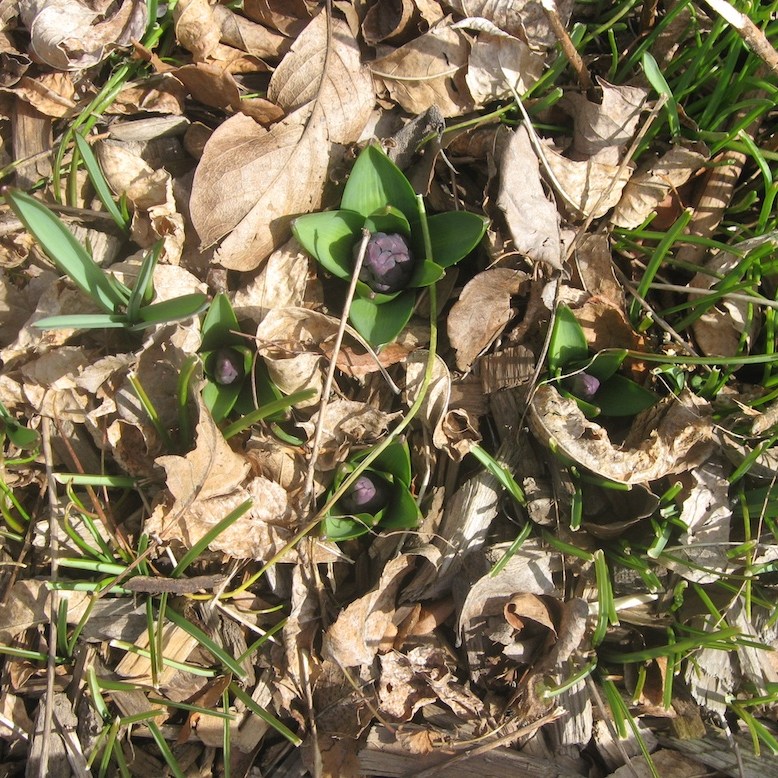
I went for a walk before I wrote this and saw the first green shoots rising from the ice-soaked ground in a neighborhood park.

Thatโ€™s an allegory for you, right there.

This is how the weather changes. This is how the tides turn.

With the first push out of the frozen mud.

How it starts.


Illustrated with photos I took this week.

On Being Kryptonite

Recently, El Cheeto Loco announced he would remove the Chair of the Kennedy Center for the Performing Arts and replace that person with โ€ฆ himself!ย 

Since heโ€™s already made his horse a senator, I suppose he has no one more qualified on hand. In any event, he has declared himself Emperor of American Culture, promising to whip us all into he-manly shape with no more of that icky drag stuff that reminds him of, I suppose, that time he went on a date with Rudy Giuliani.

Unsurprisingly, the response from the arts world has been a resounding chorus of โ€œOh, fuck no!โ€ for about 10,000 serious reasons.

As Iโ€™m part of the arts world, Iโ€™m joining the chorus. I hope to talk you all down a bit about it but also pep you up a bit. 

Like everything that asshole does, this move starts out scary but comes apart under scrutiny and yields to a plan of action. Letโ€™s parse it out.

The Scary Part:

You are correct. This is a precursor to a program of censorship, perhaps a retread of Joe McCarthyโ€™s Red Scare campaign of terror in the 1950s, with the modern witch-huntersโ€™ obvious, but only first, targets being trans people and the wider LGBTQ+ community.ย 

Iโ€™d be willing to bet, in fact, that McCarthyism 2.0 is the literal plan because El Cheetoโ€™s first evil mentor was Roy Cohn. 

For those lucky enough not to remember, Roy Cohn was a lawyer notorious for, among other unpleasant things, assisting McCarthy as chief counsel in his crusade to accuse and destroy supposed communists in the media and government, until both men were taken down by their own over-reach plus exposรฉs by Edward R. Murrow.

Cohn then went into private practice in New York. There, he was so infamously crooked that he was eventually disbarred, but not before collecting a list of rich, famous clients, including one Donald J. Trump. 

Those two were a match made in hell, by many accounts, and cut quite the swath together through the Studio 54 party scene. It ended in 1986 when Cohn died, sick, alone, and despised. His best bud, Little Donnie Dipshit, refused to visit him and denied their relationship at the very end. (Sound familiar, Rudy?)

Nevertheless, El Cheeto has yearned for his old friend over the years, lamenting every time some attorney tells him something he wants to do is illegal, โ€œWhereโ€™s my Roy Cohn?โ€ 

(Heโ€™s dead, Donnie, and you wouldnโ€™t even go when he called for you on his deathbed, you backstabbing bastard.)

So with one of the architects of McCarthyism as a formative guru, we can be sure Trump is dreaming of a 21st century HUAC, endless show-trial hearings led by Gym Jordan and the Three Weird Sisters of the House Maga Caucus, Boebert, Greene, and Mace, ruinous SLAPP lawsuits, bans, cancelling, and gleeful mobs.

The goal will be to erase any art and literature that doesnโ€™t glorify the maga ideal. We can expect floods of AI-generated versions of โ€œBirth of a Nation,โ€ full of racial, ethnic, and gender stereotypes and heavy doses of christian-nationalist propaganda, in which the heroes are the kinds of bulked-up, gun-slinging dudes Trump enjoys looking at, in slo-mo.

Weโ€™ll also have the spectacle of media companies, music labels, publishing houses, and key celebrities, piddling themselves to be the new regimeโ€™s favorite Leni Riefenstals. 

Meanwhile, the rest of us will run like rats in fear of what the mobs will do to us if we take one wrong step.

Iโ€™m pretty sure thatโ€™s the plan.

Only it wonโ€™t work.


The Coming Apart Part:

This escalation of the culture war will fail for two reasons.

I. The first reason is thereโ€™s no there there.

The magaists are like most Americans in that they donโ€™t understand there is no arts system in the USA. We have no credentialing bodies, no established academies, closely linked to government or social elites, that dictate American Arts & Letters. We have people who claim to be that, but theyโ€™re bullshitters.

Many people believe the federal government does support the arts, because politicians talk about supporting the arts, but thatโ€™s bullshit, too. Our government support consists basically of the National Endowment for the Arts and a few sincere but fragmented programs with painfully tiny budgets that are constantly being cut. If people knew how meager federal arts funding is, even diehard art-haters would think, โ€œDamn, thatโ€™s cold.โ€

This lack of support has a few causes, but itโ€™s mostly due to the US having never given two shits about the arts. Sorry, but facts.

Except for that brief fling with the WPA, the creative sector has never been important enough to warrant a bureaucracy of our own. We have no departments or agencies. Hell, we couldnโ€™t even get into education despite the traditional pairing of the arts and sciences – and STEAM being an objectively better acronym than STEM.

Which means that there is nothing for Mango Mussolini to weaponize.

He can cut institutional funding, and that will hurt PBS, museums, and state programs, but theyโ€™ve been surviving political sabotage for decades. And 99+% of individual creatives never see a dime of that money anyway.

He can threaten and bribe media to act as censors for him, but theyโ€™re already at war with artists, replacing us with AI and churning out slop-buckets of conformist garbage.

At the federal level, thereโ€™s no infrastructure, no organization, not even any money – no way for him to blanket-crush us the way he blanket-cut-off everyone elseโ€™s funding and blanket-pardoned his pet insurrectionists.

This was true in McCarthyโ€™s day, too, but back then limited technology allowed media companies to own the means of cultural production. You had to go through Big Media to make movies and television, publish books, record and distribute music, etc. McCarthy could attack speech indirectly, evading the First Amendment, by attacking the companies the arts depended on with bogus national security claims. And they were only too happy to serve up sacrificial victims, such as the Hollywood Ten.

Even so, censorship mainly hit corporate media, while in the greater art world, that period saw a flood of innovative, avant-garde, politically charged, and socially challenging creativity. How? Iโ€™ll get back to that.

And letโ€™s remember, the 2020s are not the 1950s. Thanks to modern technology, artists today are more independent than weโ€™ve been in centuries. And as the USโ€™s red-headed stepchildren, we are used to self-funding our projects with no corporate middlemen (because weโ€™re not that profitable). If you want to know what real-life โ€œbootstrappingโ€ looks like, consult an indie creative. Itโ€™s not as glamorous as the oligarchs make out.

When Trump comes for the arts, lacking any kind of structure or leverage, heโ€™ll find itโ€™s like emptying the ocean with his hands. Heโ€™ll have to terrorize each one of us individually, and nobody even knows how many of us, professional and amateur, there are. I donโ€™t see him doing that for very long, do you?

II. Especially since the second reason his culture war will fail is that thereโ€™s no there there on his side, either.

The culture war has always been fake – mere inflammatory slogans, and the more ephemeral and illusory the scapegoats, the better they serve to enrage and divide people.

When you turn the concept into a thing, however, then you have problems.

So Clementine Caligula takes over the Kennedy Center. Whatever. Itโ€™s just a theater. Itโ€™s not attached to anything. No dominoes will fall, nor ripples spread because of it. This hostile takeover will thud into nothing, just like the thousands more hostile takeovers heโ€™ll have to do if he wants to make a moral crusade of it.

And none of it will actually impact the arts.

The Kennedy Center is just a theater like any other. It is legendary only because of the audience that goes there. Its association with the Presidency makes it a favorite venue for wealthy art patrons – the glitterati whom Trump envies and hates to his rotten core.

By an amusing coincidence, many of them are also among the countryโ€™s biggest political donors. Oops.

But that glamorous world he resents is completely separate from the sweaty, ink- and paint-stained, 80+ hours/week world where art is actually made. Artists and Kennedy Center patrons exist in different realities, only crossing paths briefly at a few events per year.

Magaists donโ€™t realize this because they never see either artists or art. All they see are the glitterati, and their own culture war slogans, through the filter of their angry fantasies.

By grabbing the Kennedy Center, Trump made the fantasy real and revealed its emptiness. Like he always does.

Meanwhile, we artists keep on working. Like we always do.


The Plan of Action Part:

But the McCarthyist threat has been made, and the malicious, destructive intent behind it is more real than Trump himself. It must be understood to be counteracted.

The Red Scare, the blacklist, todayโ€™s culture war, even the First Amendment fights over Black history, womenโ€™s history, and trans representation – none of that is really about the arts. The books, artworks, shows and films being defunded and banned donโ€™t actually matter to fascists. We are not the fascistsโ€™ true targets. We are just a means to an end.

They really mean it when they go after the news media, because journalists confront them head-on, exposing their secrets. They understand that kind of threat to their power. Thatโ€™s a hard danger to them.

They donโ€™t see artists that way. To them, weโ€™re just a bunch of farty flibberty-gibbits who canโ€™t take a punch. But lots of people like us, so they go after us to get to those other people – the public, We the People. 

They destroy the arts because art is personal and emotional, and they want to hurt and scare the people and tell them they canโ€™t have anything private, anything just their own. The fascists have to be the center of their attention.

Itโ€™s like the abuser who punishes a child by putting down their pet.

They see artists as weak, disposable, something someone else loves, and no more threat to them than so many puppies.

They think that way because they are stupid. They can only understand the hard danger of direct confrontation. They donโ€™t understand the soft danger of the arts. 

Journalism is about information. The arts are about hearts and minds. Journalism tells you what happened. The arts tell you how to feel about it. Journalism speaks in plain words and clear images. The arts speak a subtle, even subliminal, language of symbolism and emotion. Art can deliver its messages without anyone being aware what itโ€™s doing, let alone able to pinpoint its methods.

This brings us back to the outpouring of challenging art in the 1950s despite McCarthyโ€™s pogroms.

I guarantee that any maga-fascist who happens to read this essay will laugh at me right about now. This is such self-soothing copium bullshit, right? Art is crap.

Thatโ€™s what the McCarthyists thought. We are nothing to them. They canโ€™t detect our signals or break our codes. They donโ€™t get our banter. They donโ€™t see anything in us that is target-worthy in our own right. Unless they want to drown a puppy to make children cry, they pay us no attention.

And thatโ€™s how the 1950s was full of American art, literature, drama, and music that protested injustice, called out corruption, challenged social and moral norms, critiqued the church, the government, the draft, specific news events, etc., and included the voices of people of color, immigrants, women, LGBTQ+ people, and more.

Artists even went after McCarthyism itself. Arthur Millerโ€™s play, The Crucible, came out in 1953, the height of the Scare just before its collapse.

So what does this mean? What should we do right now?

Make Art.

Thatโ€™s what we should do. 

I realize it sounds glib to play up all this drama and end with telling people to carry on as theyโ€™ve been doing, but hear me out. 

I believe the most direct, foundational form of protest is to keep doing the things the oppressors donโ€™t want us to do. This is related to Timothy Snyderโ€™s advice, โ€œdo not obey in advance,โ€ i.e. donโ€™t cede our agency, our liberty, our principles to appease the autocrat.

I amend that advice to simply this: Donโ€™t Obey. Full stop. Forget โ€œin advance.โ€ Donโ€™t obey ever.

Fascists want artists to shut up because, if we shut up, others will, too. They think that, if they silence artists, they will have taken something personal, something intimate and meaningful to the people – our cultural identity – and the people will become demoralized and will submit.

But they canโ€™t silence us by force. Instead, they try to scare or depress us into silencing ourselves to appease them, and then theyโ€™ll take the credit for having done it to us, and everyone will fear them, and theyโ€™ll win. Thatโ€™s what the blacklists, book bans, censorship, and mobs are for – to get us to stop making art.

So how should we respond to that?

By making art, thatโ€™s how.

But Jen, I sense you shouting, how???? I want to fight fascism, but Iโ€™m tired and confused and stressed and poor. How am I supposed to do this?

I hear you. Your concerns are legitimate, but this is doable. Plenty of experts on this stuff (and how fucked up is it that there are experts on this stuff?) offer tips on sustainable resistance. Here are a few that are working for me, so far. Your mileage may vary, but give them a try:

1. Breathe.

Deep, cleansing breaths, calm and grounded. Attacks on the arts are psychological warfare, intended to scare and upset people, but it only works if we let it into our heads. When you feel the tension rising inside, take a break. Get off the internet. Go outdoors. Go to your work or practice space, and do your creative exercises. Natural light and art are literally, neurologically, the best tonic for calming the nerves and mind. Apply liberally as needed. 

2. Protect yourself.

Beef up your cyber security. Get your own website, backed up offline, so your work is not dependent on any corporate platform. If youโ€™re a creative employee, start an independent side hustle, and have a lawyer look over your employment/contract terms re ownership and exclusivity. Save your money. Choose whom you allow into your personal circle, even as you reach out to the world. No more universal love and light, kumbaya, all are welcome bullshit. Take anyoneโ€™s money, but vet your friends.

3. Connect.

It will fall to all of us to look out for each other and to support and protect the vulnerable. Collaborate with your fellow artists. Network within your communities. Pour energy into local arts cooperatives and mutual aid groups (after vetting them, of course). Network across interest groups, too, for practical support with living costs, political action, legal services, schooling, even sharing healthy food and consumer goods.

Footnote: Avoid excessive ideological purity. When vetting the people you bring in and the groups you collaborate with, keep your ethical standards high, but judge people more on their values and actions than their labels. We will need carefully chosen friends in police departments, for example.

4. Keep it sustainable.

This is an โ€œin it for the durationโ€ situation, so donโ€™t try to do it all on your own, and donโ€™t put unreasonable pressure on yourself. Assess your skills, interests, passions, resources, obligations, personality. Ask yourself realistically what kinds of actions, artistic, economic, political, etc., fit with what you can do going forward. Make a manageable list, and do those things, knowing there are millions of other people making similar assessments and lists. Carry your weight, and trust others to carry theirs.

And if some donโ€™t, kick โ€˜em and carry on with those who do. Part of sustainability has to be not wasting energy on the uncooperative.

5. Be Kryptonite.

Existence is Resistance. Being an artist is resistance. Choosing who you will or wonโ€™t work for is resistance. Choosing where you will or wonโ€™t spend your money is resistance. Growing a garden, sewing your clothes, sharing with neighbors, teaching children, cleaning rivers – all that stuff is the resistance, because it undoes or undermines what the fascists are trying to impose on us. So live your life on your own terms, not just in reaction against what they do. Donโ€™t force yourself into fighting fascism as a separate, additional thing you must do. Being a free human being is the fight against fascism. So when youโ€™re figuring out how to be in the fight, consider all the things you do every day and try to do them in a way, with an energy, that makes them toxic to fascism. Thus, just by your existence, you are poisoning the well of that evil ideology. Then everything else you add to your to-do list is gravy. Liberty gravy.


No sugarcoating. The world is in trouble. There is a disease in our body politic, and it will take more than just ousting the current crop of villains to cure it.

We in the arts, being the cultural influencers, have a vital role to play. We may be disorganized and freaked-out, but this is our moment to do what we do. Win hearts and minds. Soothe shattered nerves. Awaken atrophied senses. Guide the narratives, and shine light in the darkness.

So breathe, hydrate, touch grass. And keep making art.

-Jen

Illustrated with details from my collage. XIX. The Sun, symbolically relevant on many levels.

Happy Lunar New Year: The new moon and a new poem

Today begins the year of the Wood Snake according to the Chinese lunar calendar. In the Chinese zodiac, it seems snakes are associated with wisdom and calm, grounded dispositions, something I think we could all benefit from this year. Last night, I wrote this:

Snow is falling on my street
Slow and light
Bright
against the night

The wind calmed down at last.
I draw the blind
across the glass
and go to bed.

They say the wind will blow again
tomorrow
So tonight I sleep
in blankets deep
and the silence of the snow
falling on my street.

Another Day One: an artist meets 2025

Monday was a bad day.

I started writing this at 10 to midnight on January 20, 2025. By the time I finish and certainly by the time you read this, we will be well into a new day.

But as of starting, Monday was bad.

As my subscribers know too well, I do not hesitate to express my political opinions in this art and writing blog. Marketing people always say you shouldnโ€™t do that. You want your audience to get to know you, but only the sellable you, the SEO-friendly you, the positive, unchallenging, amusing version of you that wonโ€™t turn away potential sales. Not the you that might not be universally palatable to all demographics at all times. Nobody wants to see that crap.

But you know what – fuck that noise. 

Thatโ€™s job advice – the cubicle-jockey concept of professionalism. Trust me, I have jockeyed enough cubicles in my life to know that the conventional wisdom against being abrasive or opinionated, against publicly taking a stand on issues, against bringing your personal views into the work space, is all about maintaining the work flow of your bossโ€™s business. 

And itโ€™s good advice as far as it goes. Itโ€™s the right way to behave when youโ€™re working for someone else. Itโ€™s especially good advice for anyone who is getting paid to represent someone elseโ€™s image or brand.

But it doesnโ€™t apply here because Iโ€™m not an employee. I donโ€™t have a boss to answer to. I am the boss in this space.

Jen Fries Arts is the portal into my studio. When you come here, youโ€™re an honored and welcome guest in my house, but I donโ€™t work for you, so I donโ€™t have to separate myself from my work. 

As a business-owner, which is what an independent creative is, my professionalism is about delivering goods on time and within agreed terms and dealing in good faith. Itโ€™s not about sucking up. Itโ€™s not about putting on a mask and lying to you about who you are following on this site.ย 

Thatโ€™s why, when bad things happen in the USA, where I live, I post statements about them. Long-time readers will be aware that I am firmly anti-fascist, anti-capitalist, anti-racist, -sexist, -transphobe, etc., firmly pro-democracy and civil rights, an ally to marginalized people, and, especially, pro-Earth.

I make statements because Iโ€™m a future-oriented Aquarius sun INTJ with a fiery Sagittarius moon and pragmatic Virgo ascendant, so when shit happens, I must confront it and declare my path over, under, around, or through it.

Well, on January 20th, shit happened. It was probably the worst non-personal day of my life so far. Iโ€™m sure Iโ€™m not alone in that.

To be blunt, as of 1/20/2025, a new Confederacy is in charge of the USA, and this country is at war with itself.

I know a lot of experts will balk and start parsing legal definitions and splitting historical hairs – and I certainly canโ€™t argue with them – but personally, Iโ€™m ready to call it. Civil conflict.

Itโ€™s been brewing as a cold war in politics and the media for many years, but it turned hot on Jan 6th, 2021, when Donald Trump instigated a violent mob to attack the US Capitol with the aim of overturning the 2020 election. I donโ€™t care what the magaists say, we all saw it.

We beat back that attempt on that day, but, stupidly, we did not press our advantage. We did not root out the corruption in our institutions. We did not defend our Constitution. We failed in our civic duty.

And sure enough, our enemies came back for another round. This time, emboldened by lack of consequences, thereโ€™s no pretense, no mask, no cubicle-politeness. They are out to destroy people they hate. Simple as. You can find the details all over the news media. I wonโ€™t go into it here, but the rightwingโ€™s extremism is cartoonish in its malice and cavalier abandonment of law.ย 

He said heโ€™d be a dictator on Day One, and here we are.
Now the question is, what will he be on Day Two?

Or rather, will there be a Day Two at all? Or will January 21, 2025, be another Day One –
the first day of a new American independence movement?

Iโ€™m no billionaire oligarch, media mogul, or A-list celebrity who goes to bend the knee and kiss the ass for favors and privilege. 

Iโ€™m just a working stiff like millions of others, barely scraping by. I donโ€™t have to beg Mango Mussolini not to push me off some high perch. I may speak as I please and create as I speak. So here goes.

When I talk about civil conflict, Iโ€™m not talking about armies seizing cities and carving out territories. Thatโ€™s not going to happen.

However, Iโ€™m also not talking about a bloodless coup or some kind of paper secession program worked out in courtrooms. People have died by political violence in the US in recent years, both before and since 1/6. I do believe there will be more of that. 

We are entering a dark time, and we will all be caught up in it, one way or another. It will not be possible to pretend itโ€™s not happening, as we have for so many generations till now. Everyone is going to have to choose how to relate to these times and its belligerent factions.

But what could I possibly do, broke-ass, minor creative and isolated individual that I am, with neither money nor connections? What can any of us do, realistically?

Well, realistically, we can think about this very question. We can think seriously about how we define ourselves as human beings. That itself is an action, a response, to our present moment.

We will all be defined by world events, whether we participate or not. Everything we do from now on will come with moral assumptions and judgments attached. No, itโ€™s not fair, and it shouldโ€™t be this way, but it is because thatโ€™s how deep the civil conflict has saturated the fabric of society. Literally everything we do tells the world who we are.

And thatโ€™s where I come in – I and all creatives, big and small, maybe especially small.

Because we artists, storytellers, poets and singers, designers and artisans, actors, dancers, etc., are the real influencers.

Sorry to all the modern influencers on the internet, for whom that cynical title was invented. Iโ€™m glad they earn decent money, but artists have been the cultural influencers for thousands of years, and weโ€™re still here.

Weโ€™re here, and we are not going to be replaced by AI or rendered irrelevant by artificially shortened attention spans because what we do is core human stuff. We adjust with the times, but fundamentally, there is little difference between what artists do today and what the cave painters were doing 40,000 years ago. When a thingโ€™s got legs like that, itโ€™s not a fad. Art is fundamental.

Creatives channel the vibes of society. We interpret world conditions. We explain, contextualize, and set the narratives. We comfort, reassure, encourage, excite, and sometimes scold, challenge, and hold to account. We create the culture references everyone turns into memes. We bring people together in mutual recognition.

We are the bards who raise kings with praises and tear them down again with satires. We open minds, get people curious, thinking, and talking. We are dangerous to power, and thatโ€™s why the powerful censor us, slander and denigrate us, cut us out of school curricula, ban our books.

Granted, too many of us have slacked off. Weโ€™ve let ourselves fall into self-indulgence and the complacency of thinking weโ€™ll never amount to anything if we donโ€™t reach some unnecessary level of wealth in some impossible time frame so why even bother. Weโ€™ve allowed ourselves and our profession to be made ridiculous playing out banana and duct tape kayfabes with the ultra-rich.

Thatโ€™s got to stop, right now. 

This is the Information Age. Control of thought is the key to power, and very bad people have seized that deep power via disinformation, distraction, propaganda, and censorship.ย They have woven webs of confusion and fear around every mind they can reach. The damage is profound.

And there is no one – no tech developer, political leader, college professor, or tragically today, journalist – better equipped to break through those webs than artists. I truly believe this.

Because what they do is fake. What we do is real. They tell lies. We cast magic. They spin webs. We build worlds. When the artists wake up, we will wake up the world.

So wake the hell up, artists. Itโ€™s work time.

You may be thinking, โ€œWhat the frik are you talking about, Jen? You just make collages and nature pictures and sometimes weird shit with bones and junk, and nobody knows who you are. How can you wake up the world?โ€

Recall, I said this may come down to small artists like me.ย 

Why? Because we are your friendly neighborhood artists. The regular, working people whose art is hanging in regular, working peopleโ€™s houses all over the country. Weโ€™re the bands playing in local bars, the writers giving talks to community book clubs. We teach classes down at the Y and paint kidsโ€™ faces at municipal fairs. We set the style and look of a community with park sculptures and downtown murals.

People know us, and we know them. We have the ability to get inside their heads, to bypass the programming of social media, 24/7 news, and ideological podcasts, and stir up memories, emotions, connections.

We can plant the seeds of better possibilities and better choices. We can set ripples in motion that have the potential to grow into tsunamis.

Iโ€™m talking about the work of artists supporting a grassroots awakening against the malefactors of the new fascism. Iโ€™m talking about a counter-culture that can help dissolve the webs we are trapped in.

How we do it will vary artist to artist. Weโ€™re all different. Some of us offer healing and therapy. Some, reassurance or respite. Others are rabble-rousers, whistleblowers. 

Myself, Iโ€™m into raising consciousness. I seek to awaken awareness of a larger world and deeper experiences. Youโ€™d be surprised – itโ€™s pretty effective. Anyway, thatโ€™s the kind of artist I am.

And this long-winded essay aims to raise the consciousness of my fellow artists.ย 

It is time now for all of us to think about what kind of artists we are.ย 

I would like all of my colleagues, all creatives, pro and amateur, in every medium and genre, to take some time and think about what we are putting out into the world, what we want to be putting out there, what we should be putting out there.

How can we, with our small, human abilities, contribute to building a better world?

Many of us will start dissembling. โ€œI just play piano.โ€ โ€œI just do pet portraits.โ€ โ€œI just make drawings.โ€ 

Stop that! There is no โ€œjustโ€ in art. All art is more that it appears, because thereโ€™s a human behind it. 

Quit belittling yourself. Own your work, your thoughts, your dreams. Create, share, teach. Speak freely, and let the only words you never say again be those self-poisoning apologies for your existence.

The world needs us because tyrants fear us.ย They fear our doodles, ditties, and dog drawings, because they canโ€™t control how our work lands with the people. Neither can we, but we donโ€™t want to. Art liberates.

So thatโ€™s my assignment to myself, and my call to all of you: Create. Express. Do the things, no matter how nuts. Communicate. Cooperate.

And above all, speak truth to the people around us, because truth is the first victim of autocracy.

Itโ€™s now January 22. Writing this took me all of Day One of the New Movement. Thus it begins.

Illustrated with details from various of my works over various of my years.

A new day comes: choosing hope at the crossroads

Hi, all.

Itโ€™s been almost half a year since I posted last, and the reason this time is that Iโ€™ve been pretty deep in the weeds, personally. There have been some developments in my work, some chronic health issues popping up, and some practical things that had to be addressed. But mostly itโ€™s been the same worry and stress that everyone has been feeling lately – politics.

Tomorrow is Election Day in the US, the last day for casting ballots and the first day of counting. Itโ€™s tomorrow as of the time of writing this blog post. By the time you read it, weโ€™ll be well into the process. I donโ€™t expect it to be quick, clean, or easy. It will likely be some time before we know for sure what path my country is going to take.

I wonโ€™t lie, Iโ€™m sick to my stomach about it, but in keeping with my personality, Iโ€™m more angry than scared. There are people I will never forgive for what theyโ€™ve taken from me and my world these recent years. Iโ€™ve lost friends and family connections to an ideological cult. My cynicism is a hot, inflamed mess. My capacity for trust is totaled, uncertain if it can ever be fixed. Iโ€™ve felt stuck, paralyzed, unable to commit to plans because I have no idea what conditions to plan for. The most fantastical and outlandish worst-case scenarios seem all too plausible now.ย 

Everything Iโ€™ve been doing, all the ways Iโ€™ve been presenting myself, the public image I project, itโ€™s all being second-guessed. Can I, like this, really operate in a new reality? Is this version of me even functional, let alone relevant, to any of the roads opening before me? And if not, how should I adapt? Which Jen should take over and where should she appear?

By 1:00AM, Tuesday, November 5, 2024 (though I guess itโ€™ll really be Wednesday morning), the last polls in the USA, in Alaska, will be closed and concepts will start transforming into things. Only then will we start to get a clear idea of what weโ€™re dealing with.

It matters tremendously, of course, but however it works out, Election Day is only the beginning. Itโ€™s just the day of making a choice. Doing things to realize that choice comes after.

Whether we end up regrouping to relaunch our opposition to ascendant fascism, or we celebrate democracyโ€™s win with sweeping actions to clean our house at last, we will need to dedicate the rest of our lives to curing the critical rot in our society. Iโ€™m coming around to the belief that this struggle will never end. It will return again and again, as outlined in an inspiring historical analysis by Heather Cox Richardson. And I kind of don’t mind that. I think this is what it means to โ€œfight the good fightโ€ and to โ€œkeep the faithโ€ โ€” to be willing to embrace that never-ending work as oneโ€™s self expression and the definition of oneโ€™s community. Thatโ€™s how โ€œAmericanโ€ should be defined, as a people who fight for freedom and stand against the forces of autocracy.

Iโ€™ve decided to get a bit of a jump on all the work, so to speak, with a series of blog articles on the topic of principles. Iโ€™ll get down to the granular texture on specific topics in later articles, but in this inaugural statement I want to make one thing clear.

I am a left-leaning, liberal progressive, and proud of it. I support progressive policies in the US, I give my vote to Kamala Harris for US President, and I want to state in as strong terms as possible that I provide no safe space – zero safe space – to haters and manipulators.ย 

If you are a racist, a sexist, misogynist, transphobe, homophobe. any kind of genderist, a corporatist of any kind, a fascist, an elitist, a denier of science, history, or simple facts, a warmonger or profiteer, or an extremist of any kind, you are not and will never be welcome here, because Iโ€™m done with all that crap. Thatโ€™s Point 1 in the post-election 2024 reality, whatever else it might be. It has always been what Iโ€™m about as a person, and it always will be. Simple as, end of.

I have only a tiny community right now, but it might grow – it could happen – and this statement will always be on this website, applicable to all people and situations. So if someday, someone has a problem coping with getting their bullshit called out, they were warned.

Iโ€™m going to wrap this up with words from the most famous American President ever to win a civil war, because I feel he captured that moment, this moment, and every similar moment more perfectly than I ever could.

And Iโ€™ll close my own words with one of my recent watercolors. Itโ€™s a very small painting of something very large. It is the sunrise.

It’s our turn now, all of us. Choose hope, people.

– Jen

The Gettysburg Address

Four score and seven years ago our fathers brought forth on this continent, a new nation, conceived in Liberty, and dedicated to the proposition that all men are created equal.

Now we are engaged in a great civil war, testing whether that nation, or any nation so conceived and so dedicated, can long endure. We are met on a great battle-field of that war. We have come to dedicate a portion of that field, as a final resting place for those who here gave their lives that that nation might live. It is altogether fitting and proper that we should do this.

But, in a larger sense, we cannot dedicate โ€” we cannot consecrate โ€” we cannot hallow โ€” this ground. The brave men, living and dead, who struggled here, have consecrated it, far above our poor power to add or detract. The world will little note, nor long remember what we say here, but it can never forget what they did here. It is for us the living, rather, to be dedicated here to the unfinished work which they who fought here have thus far so nobly advanced. It is rather for us to be here dedicated to the great task remaining before us โ€” that from these honored dead we take increased devotion to that cause for which they gave the last full measure of devotion โ€” that we here highly resolve that these dead shall not have died in vain โ€” that this nation, under God, shall have a new birth of freedom โ€” and that government of the people, by the people, for the people, shall not perish from the earth.

Abraham Lincoln
November 19, 1863

April in the garden and the sketchbook, plus other news


Spring is in full bloom, and filling my head with ideas. Behold!


Out and about

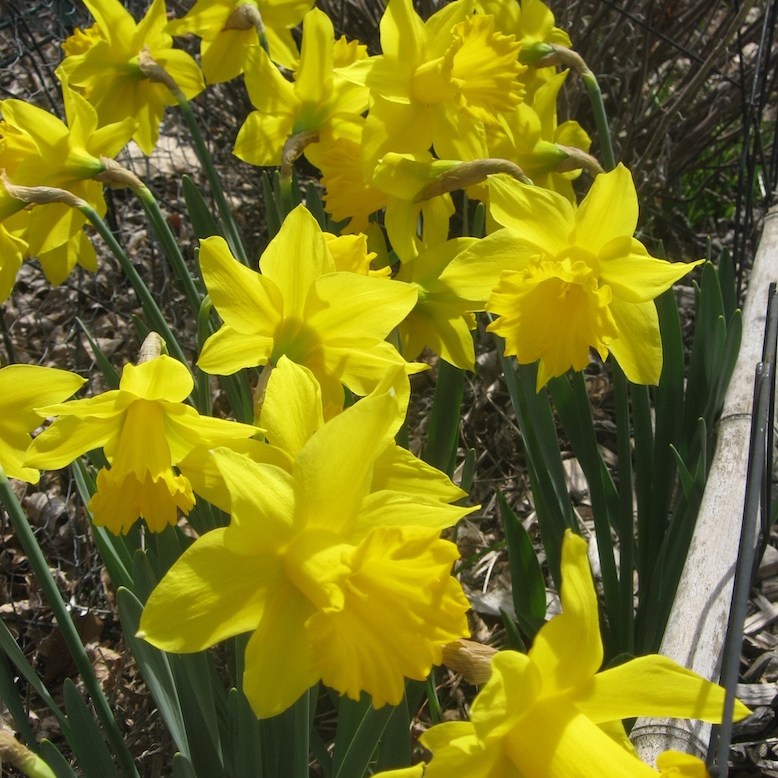
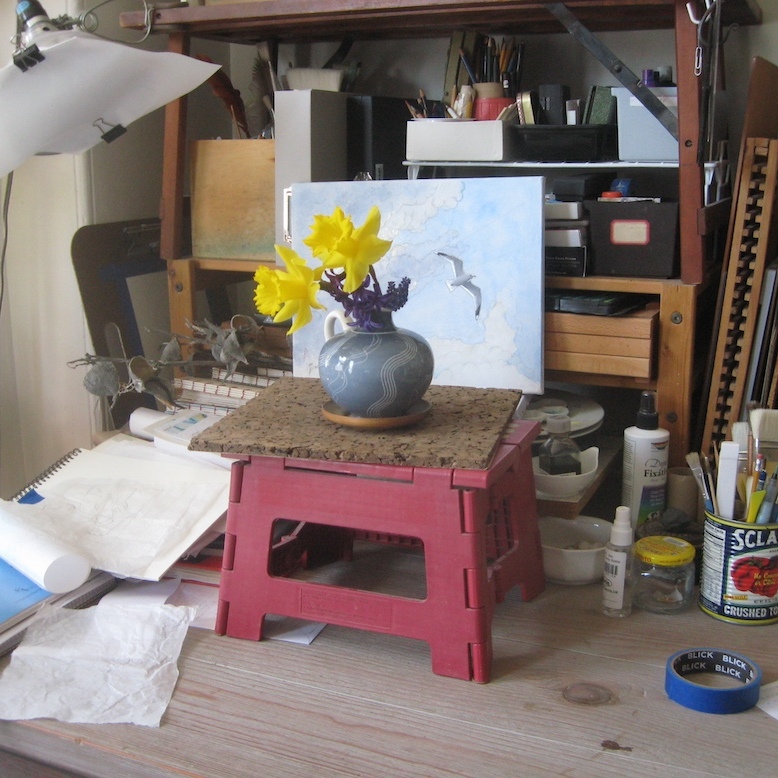
The garden is up and running – largely without me, I admit. The daffodils are especially robust this year. (I wish I could say the same for the studio lighting or my poor old camera.)


A little sketchbook tour

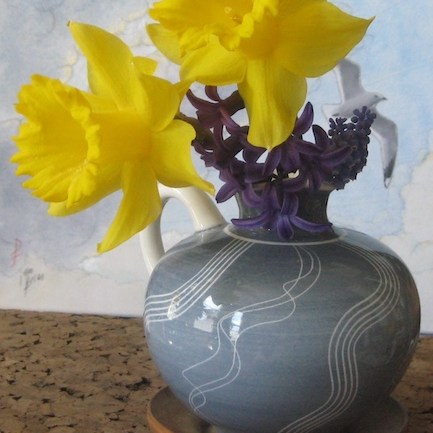
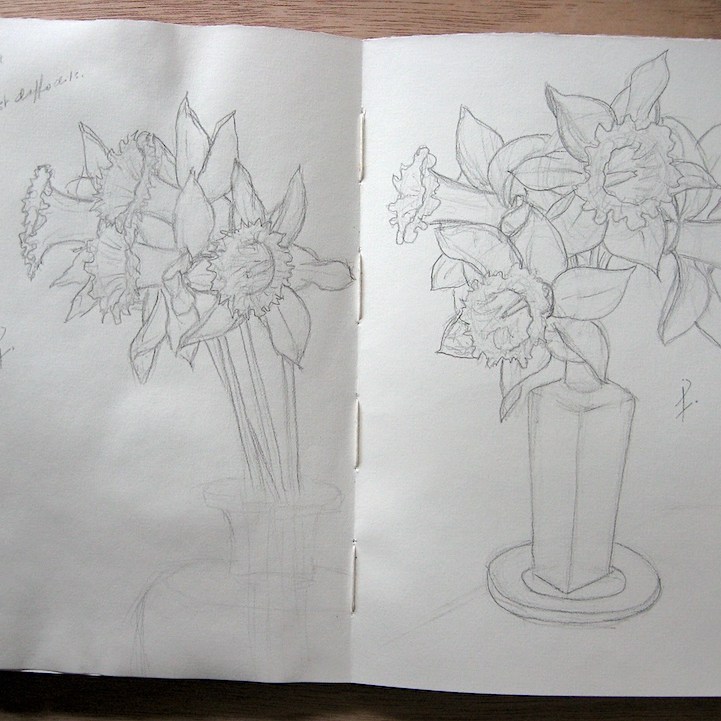
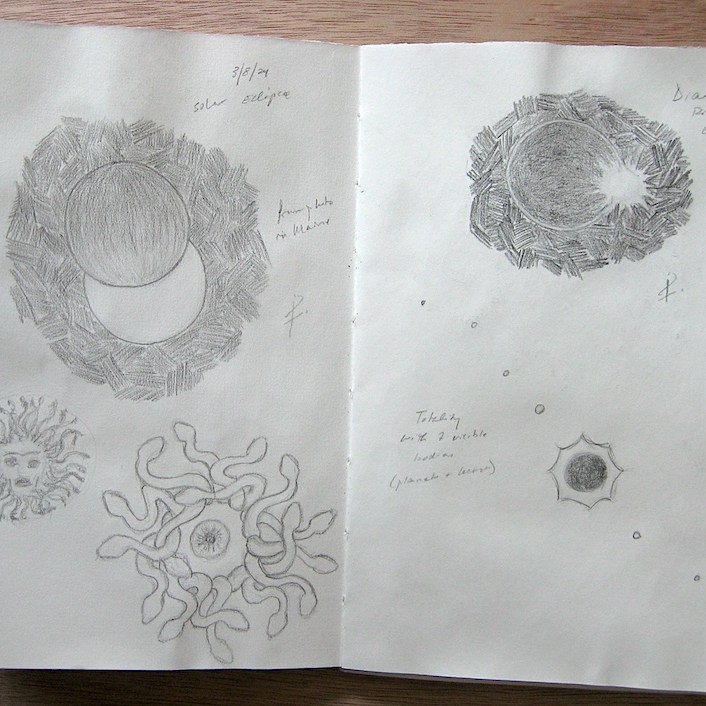
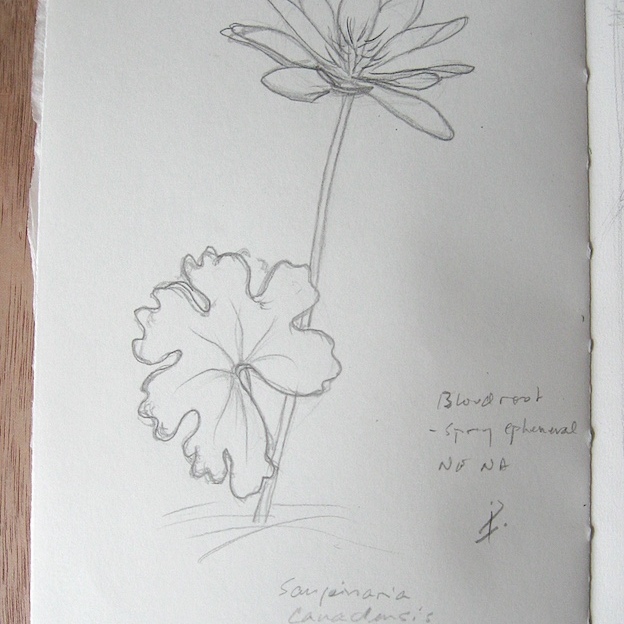
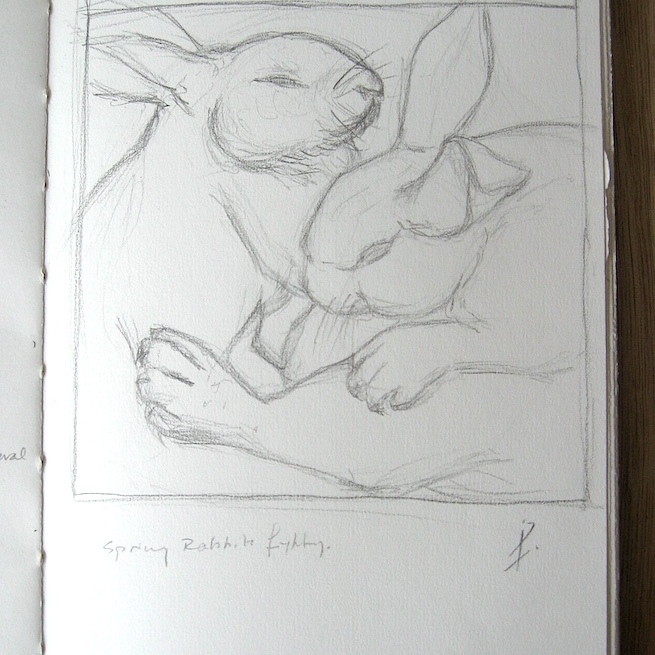
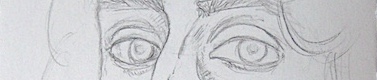
Inspired by the energy of the season, I’ve been letting all my ideas make their pitches. Those glorious daffodils again, this time in two vases. This year’s solar eclipse – from photos. We didn’t get totality over Massachusetts, so while I took a moment to observe the partial over my studio (safely!), I also watched the totality over and over, live on NASA tv. The little Medusa concept doodles happened because I am convinced Medusa and the Gorgons were solar mythic beings. Next, ephemeral springtime forest plants – North American bloodroot flower and fern fiddleheads. (Did you know, that part of the violin is both named and designed after the plant?) All of these sketches are plans for future artworks.

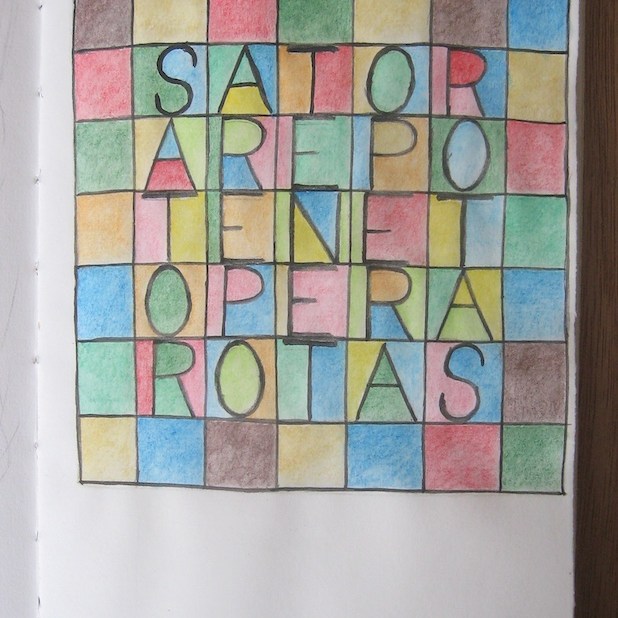
The color sketch was just testing out some watercolor pencils. I’m not particularly in love with this set, but the SATOR design is an idea in development for some typographic abstracts. The SATOR square is one of the oldest good-luck charms in western culture, found decorating doorways of ancient Roman buildings.

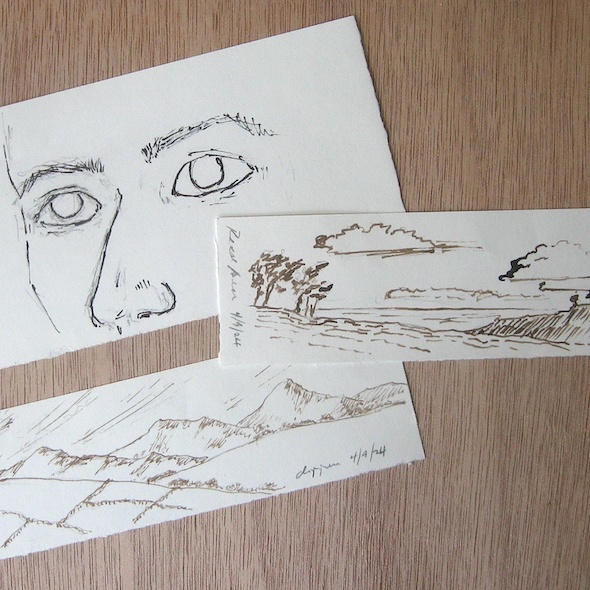
And finally, testing out different pens – a dip pen, a bamboo reed pen, and a fountain pen – the one in black. I sketched with a glass pen, too, but forgot to photograph it. I like them all, but I think the reed pen gives that Real Artist vibe, at least in these little drawings.


In Other News

New small paintings are ready. I’m just editing the photos. I’ll post them separately, and they’ll be added to the shop soon.

An Alchemy of Dragons is on a brief hiatus. As I prepare to introduce the second protagonist, Iarius, and expand my characters’ world, I found I need to corral an explosion of plot bunnies. I also realized I made some mistakes in the earlier chapters. So I decided to pause, rework some details, and get more of the story written in advance of posting. Maps are being drawn. Character portraits are being designed. A world-building wiki is coming together as I go along. I’m pretty excited about the upcoming improvements. Watch this space.

An Alchemy teaser.

-Jen

The Month that was November

I have been writing, arting, businessing, and planning, and youโ€™re going to have to take my word for it because I forgot to do the updating (and several other -ings as well).

But no, for real, did the things. I drew. I painted and collaged. I experimented with some still raw, in-the-seed ideas. I wrote and illustrated. I prepped several projects. I did a secret thing I’m not going to talk about yet.

I just didnโ€™t mention any of it to you guys. The Communications division of me is feeling a bit exasperated with the Studio division of me.ย 

Oh, well, I’m telling you now. Letโ€™s get into the update.


An Alchemy of Dragons

As you know, Chapter 6 was posted earlier this month. Read it here.

Chapter 7 is about half written so far. Hereโ€™s a glimpse into the current draft:

The first tone of the concert seemed to rise from the Bard of Pernaโ€™s fingers of its own accord, tight, hard, building tension until it broke into an arabesque of notes sparkling through the air like the sunlight itself.

He let the passage fade into silence, then repeated, and with it, the Lady of Arrak rose and began to dance. His music and her movements were relaxed and breezy. Her veils floated and subtly slipped away, exposing slender bare arms, then a hint of a colorful bodice, all grace and tender gestures


November Art Highlights

Studies for seasonal paintings.


Illustrations for Alchemy Chapter 6 were posted.


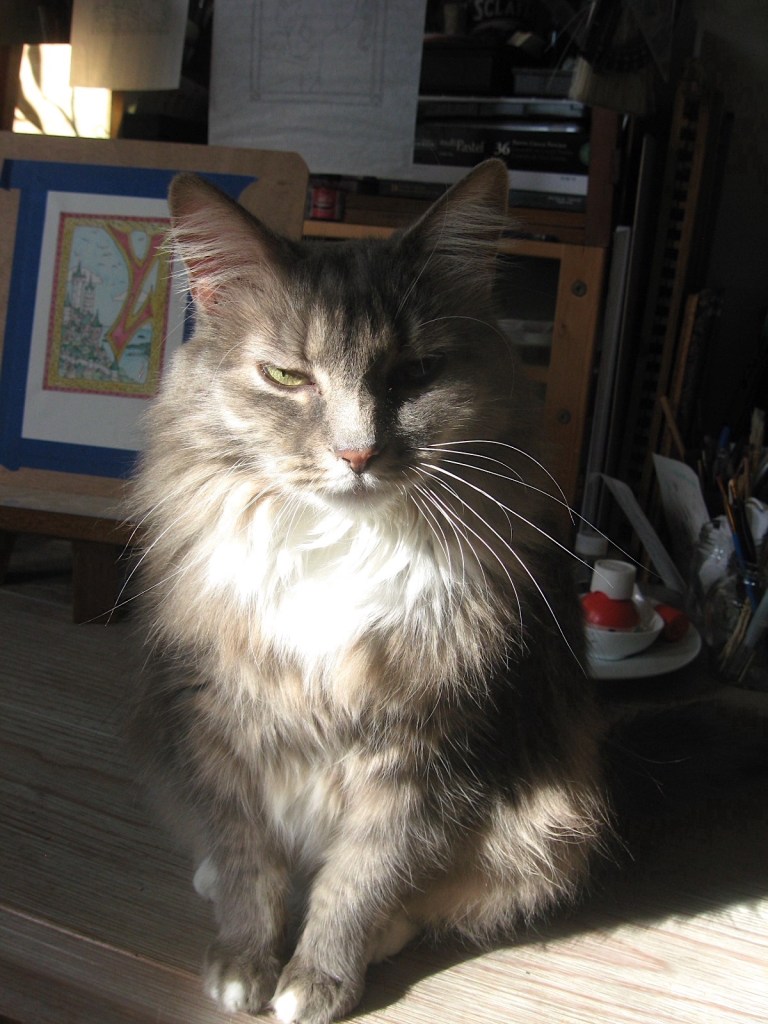
Studio Assistant Princess LunaLynx posed for a photo shoot.


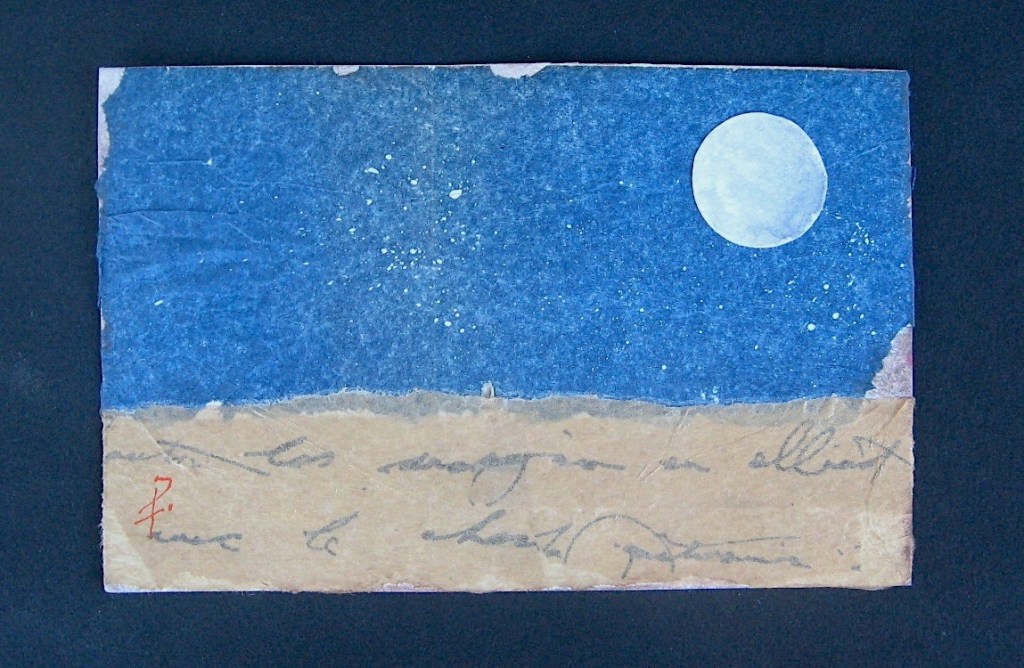
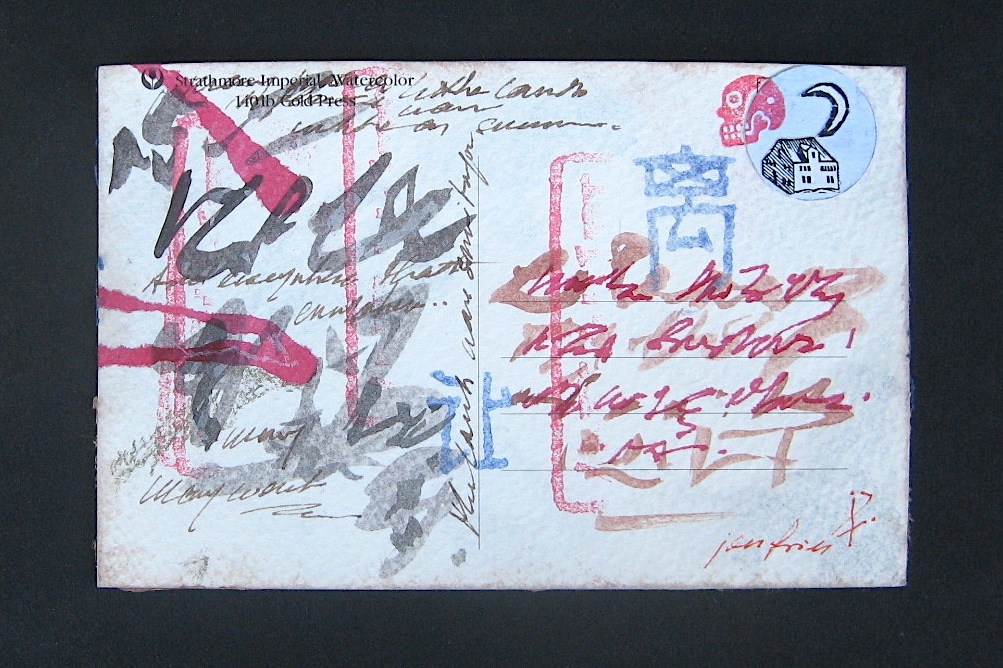
“I have traveled far to share this with you,” collage postcard with asemic writing. This was a mark-making exercise, related to a workshop idea in development. It resulted in a two-sided art object and an examination of my creative process.


And I have a question for you!

Little by little, I’m organizing my online realm and figuring out how all the knobs and buttons work. The next phase is to integrate all the parts of the Jen Fries Arts Community, i.e. all you wonderful folks who subscribe or follow in the various ways. I’m going to be tweaking some features of the website and adding some more ways for us to interact, but I need to plan which skills to learn and gear to acquire next.
I would love to get some guidance from you via the form below. Let me know what you’d like me to develop for our little circle, and I’ll see what I can do about it.

โ† Back

Thank you for your response. โœจ

Choose the features you’d enjoy as a member of the JFA Community. Select all that apply.


Thanks!

– Jen